
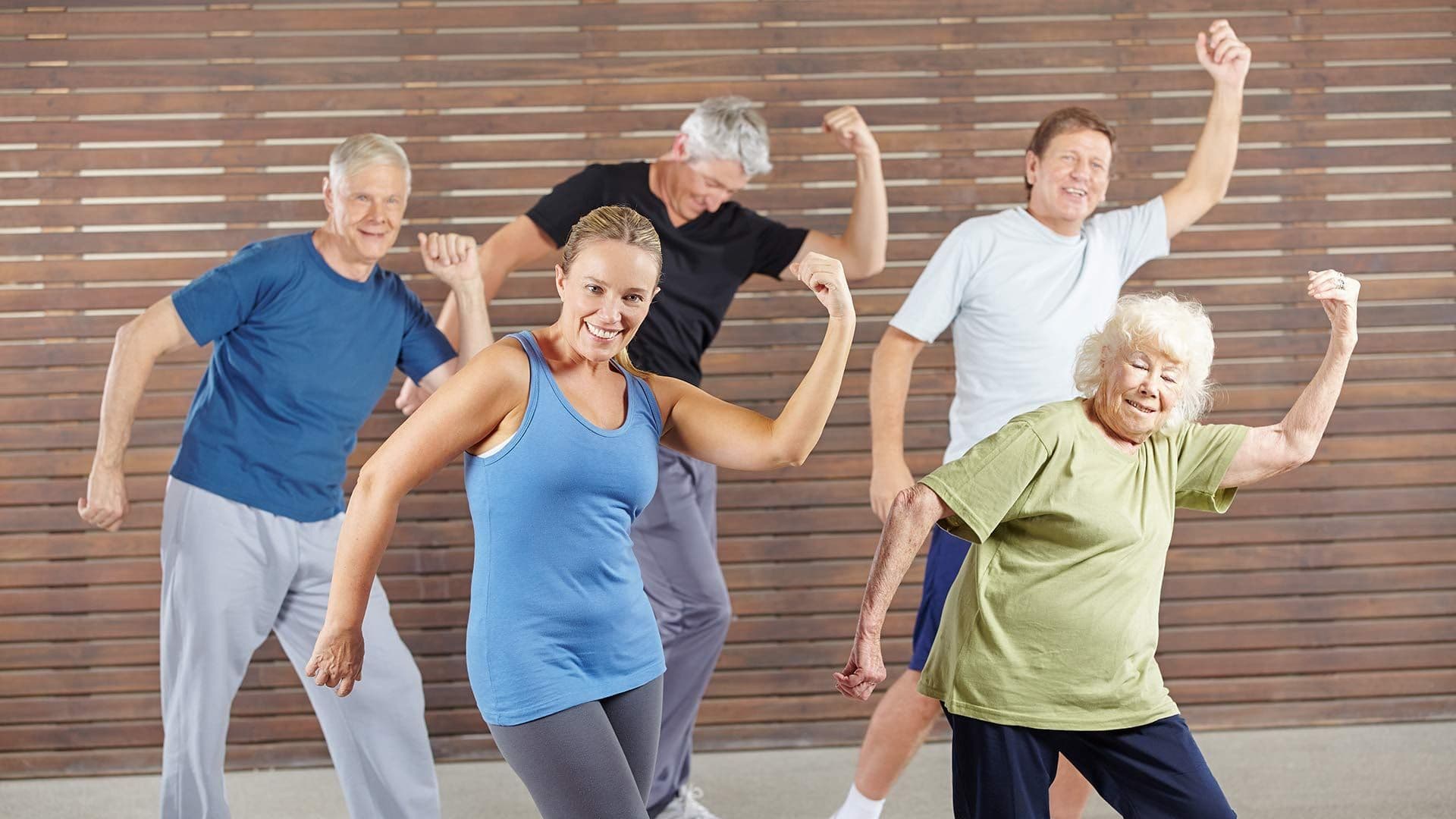
- Music therapy is a scientifically grounded complementary therapy for Parkinson's and can temporarily ease symptoms such as freezing of gait or depressive moods.
- There are two approaches in music therapy: receptive therapy through simply listening to music, and active therapy involving singing, dancing or walking to music.
- In RAS gait training, music is chosen to match the individual's step frequency; according to a 2014 study, it is important that the training is carried out continuously.
- Health insurers do not usually cover outpatient music therapy; during inpatient stays in specialist Parkinson's clinics it is often part of the treatment and then covered.
Many people know the feeling: your favourite song comes on and your foot starts tapping, or you feel like singing along. So it is hardly surprising that music therapy in its various forms is used for Parkinson's. After all, what does us good can often also help us cope better with a condition like Parkinson's disease. In this case, even symptoms such as slowness of movement (bradykinesia), reduced range of movement, muscle stiffness, gait freezing, but also depressive moods and problems with concentration can usually be temporarily relieved.
Music therapy is a scientifically grounded, complementary therapy intended to improve patients' everyday lives and give them greater joy in living. Read on to learn more about the remarkable effects of music therapy for Parkinson's.
What is music therapy?
Music therapy is the collective term for various approaches in which music is used to relieve the symptoms of a condition. It draws on the positive effects on emotional, mental and physical well-being that many people with a condition experience when singing, walking to suitable music or using instruments, for example. The positive effects of music therapy are also increasingly valued in the treatment of Parkinson's, which is why it is already used as a complementary therapy in many specialist clinics.
Effects of music therapy for Parkinson's at a glance
Are you somewhat sceptical about the positive effects of music therapy on sudden gait freezing, jerky movements (cogwheel phenomenon) or balance problems? There is no need to be. The many wonderful effects that music can have, even in this neurodegenerative disease, are considered proven. Simply listening to music, or active forms of experiencing music such as dancing or singing, can help you to:
- Raise your dopamine level in the brain.
- Improve your mood.
- Make your gait more fluid and smoother (e.g. through targeted gait training).
- Make your steps longer.
- Speed up your steps.
- Make your movements more expansive.
- Counteract freezing episodes and thereby also reduce the risk of falls.
- Get your arms swinging more strongly again.
- Increase your mobility overall (e.g. through dancing).
- Help your voice, through singing, regain a more intelligible volume, more strength and better articulation, as well as more intensive communication and stronger social exchange.
- Strengthen your breathing through singing.
- Feel more relaxed and less stressed.
- Have more energy and strengthen your inner drive.
- Improve your attention.
Music can support the production of dopamine
In people with Parkinson's, the disease-related death of dopamine-producing nerve cells in the substantia nigra (black substance) in the brain leads to a dopamine deficiency. Since the neurotransmitter dopamine is involved in controlling movement, among other things, a deficiency causes motor impairments: gait unsteadiness, jerky walking, muscle stiffness (rigidity), a short-stepped gait and an overall slowing of movement (bradykinesia) often occur. Music can help promote the production of dopamine, which can improve some Parkinson's symptoms.
Which forms of music therapy are used for Parkinson's?
To strengthen people with a condition such as Parkinson's and bring them relief from certain symptoms, music therapy takes two different approaches:
- Receptive music therapy: In this form, many people affected benefit from a therapeutic effect that comes about simply through listening to music.
- Active music therapy: In this approach, patients themselves become musically active in various ways. They address the motor problems, and often the psychological complaints as well, through singing, dancing or walking to music. Exercising to the beat of the music or the informal, improvised playing of an instrument are also forms of active music therapy.
Good to know: If you would like to undergo music therapy for Parkinson's, for example to relieve gait disturbances, you can take up either individual therapy or group therapy. Music therapy, like gait training, is used in rehabilitation at many specialist Parkinson's clinics.
RAS gait training: feel the rhythm and walk better
Rhythmic auditory stimulation, or RAS for short, is a popular approach in Parkinson's therapy. This motor training is primarily about creating positive impulses in the gait pattern of those affected and improving the ability to walk. Pieces of music are selected by metre and rhythm so that they match your individual step frequency. Metre and rhythm thus set the timing in which you should take your steps so that your gait is in sync with the music. As the training progresses, the tempo is increased by the music therapist.
According to a study published in 2014, it is important for treatment success that RAS gait training is carried out continuously. There are indications that after the training ends, the symptoms return at their usual intensity. So once you have learned the gait training, you should build it firmly into your daily routine.
What is the subtle difference between metre and rhythm?
The metre of a piece of music stands for the number of beats in a section of the song. The rhythm, on the other hand, reflects the pattern of short or long notes arranged within these beats.
Music from different genres is effective
As a rule, pieces of music with an even, distinctive rhythm are selected for gait training, such as marching music (e.g. the Radetzky March) – played at a good volume. However, according to the music therapist at the Beelitz Parkinson's centre, Prof. Stefan Mainka, suitable songs from other genres such as pop, rock and even heavy metal are also appropriate, provided they likewise have such a clear musical structure.
It is not crucial that patients are fans of this style of music or have any musical talent. The training music generally works even without these prerequisites. Alongside the rhythm, catchy melodies fulfil an important role in gait training. They are what provide the necessary momentum and the feeling in the movements and in the spirit.
Beelitz music-based exercises against Parkinson's symptoms
At the Parkinson's centre Beelitz-Heilstätten, a special exercise programme was developed to help people affected by Parkinson's. These simple exercises, which are well suited to regular training at home, also train your motor skills. You can order them as a CD via a form provided by the specialist neurological hospital of the Kliniken Beelitz. Since the exercise programme has proven itself as an intensive therapy in the treatment of motor impairments, it is also used at other specialist Parkinson's clinics, for example at the clinic in Bad Segeberg. Even a daily training session of 10 to 20 minutes can support the suppleness and range of your movements.
Therapeutic singing: strength for voice, breathing and life
Singing, for example in a choir, also demonstrates the positive effect of music in many people with Parkinson's. In our interview, the speech-disorder researcher Dr. Tabea Thies recommends regularly attending a choir if Parkinson's causes you problems with speaking, for instance if you speak too quietly or your pronunciation is difficult for others to understand. Singing simultaneously strengthens the respiratory muscles, trains the power of the voice and promotes clear pronunciation. With regular singing, you can actively counteract the motor impairments of the muscles involved in speaking, such as the facial muscles, tongue and throat muscles.
This often has the added positive effect that those affected regain the confidence to communicate with other people and take part in social life. In addition, singing often brings many other positive effects: for many people it is relaxing, relieves stress and is frequently experienced as a source of strength. Not least because attending a choir in particular often creates a pronounced sense of belonging to the group, which is good for the soul – and not only in Parkinson's.
Tip: In some cities there are special choirs for Parkinson's patients, for example in Rheine, Tübingen or Erfurt. In this community you will meet others affected and can share experiences. Ask a local support group or the Deutsche Parkinson Vereinigung (German Parkinson's Association) whether there is a Parkinson's choir near you.
Singing on your own – thanks to a karaoke app
If you cannot imagine joining a choir, you can always sing privately at home – entirely without an audience. If you like, you can use a karaoke app for this. It is a very good way to carry out regular voice training. With this application it is also possible to adjust the tempo and pitch of the piece of music to your own needs, so you can sing with joy – whenever you feel like it. The advantage: here you are safe from the critical eyes of others.
Improvised instrument playing for Parkinson's
Another form of music therapy involves playing an instrument to improve the motor symptoms of Parkinson's: instrumental improvisation. Here, those affected make music themselves with an instrument of their choice. Knowledge of the instrument is not important for this music therapy, because the aim is not to perform pieces of music perfectly. Besides the piano, percussion instruments such as drums or a melodica can be used.
The goal of this instrument-based therapy is to train the fine motor skills of the hands and fingers in Parkinson's patients and to ease stiffness in the muscles, so that, ideally, handling objects in everyday life becomes easier again. Playing an instrument can also often improve mobility in the arms and upper body.
Even brief music listening can bring improvements
According to an Austrian study, as the music therapist and rehabilitation researcher Prof. Stefan Mainka explains, people with Parkinson's were able to improve their coordination of movements and fine motor skills after just 20 minutes of listening to loud, highly rhythmic music. So try to build little islands of music into your everyday life now and then, and see whether they bring you relief from your symptoms. It does not necessarily have to be your favourite music. What matters much more is that the music has an even, distinctive beat. It may awaken in you the desire to move. In the best case, housework, for example, will then come a little more easily to you.
Dancing as music therapy
Dancing is joy of life made real, felt throughout the whole body. At its best, however, it can conjure up not only more joy, vitality, sociability and better cognitive function in dancers' daily lives. People affected by Parkinson's in particular often benefit when dancing from better mobility and coordination of movements, strengthened balance and a more upright gait, as well as an overall better gait pattern.
Suitable dances include partner dances such as tango, waltz and foxtrot, but circle dances can also show positive effects. Overall, however, any style of dance that brings you joy is recommended – (improvised) solo dances, too, can strengthen you in your energy, joy of life and movements. Participants need no prior knowledge for music-therapeutic dancing for therapy purposes. The point is to build up mobility and regain the joy of movement. What matters is simply that the movement sequences and the tempo of the movements are adapted to the individual's symptoms and that those affected start dance training slowly.
Does health insurance cover the costs of music therapy for Parkinson's?
As a rule, statutory health insurers do not cover the costs of music therapy as an outpatient therapy. During inpatient stays at specialist Parkinson's clinics, music therapy is often offered as part of the movement treatment (e.g. physiotherapy) that forms part of a more complex Parkinson's therapy. In that case, music therapy is covered by health insurance. Nevertheless, do ask your insurer. To find an outpatient music therapist near you, consult the Nationales Register Musiktherapie (national register of music therapy).