
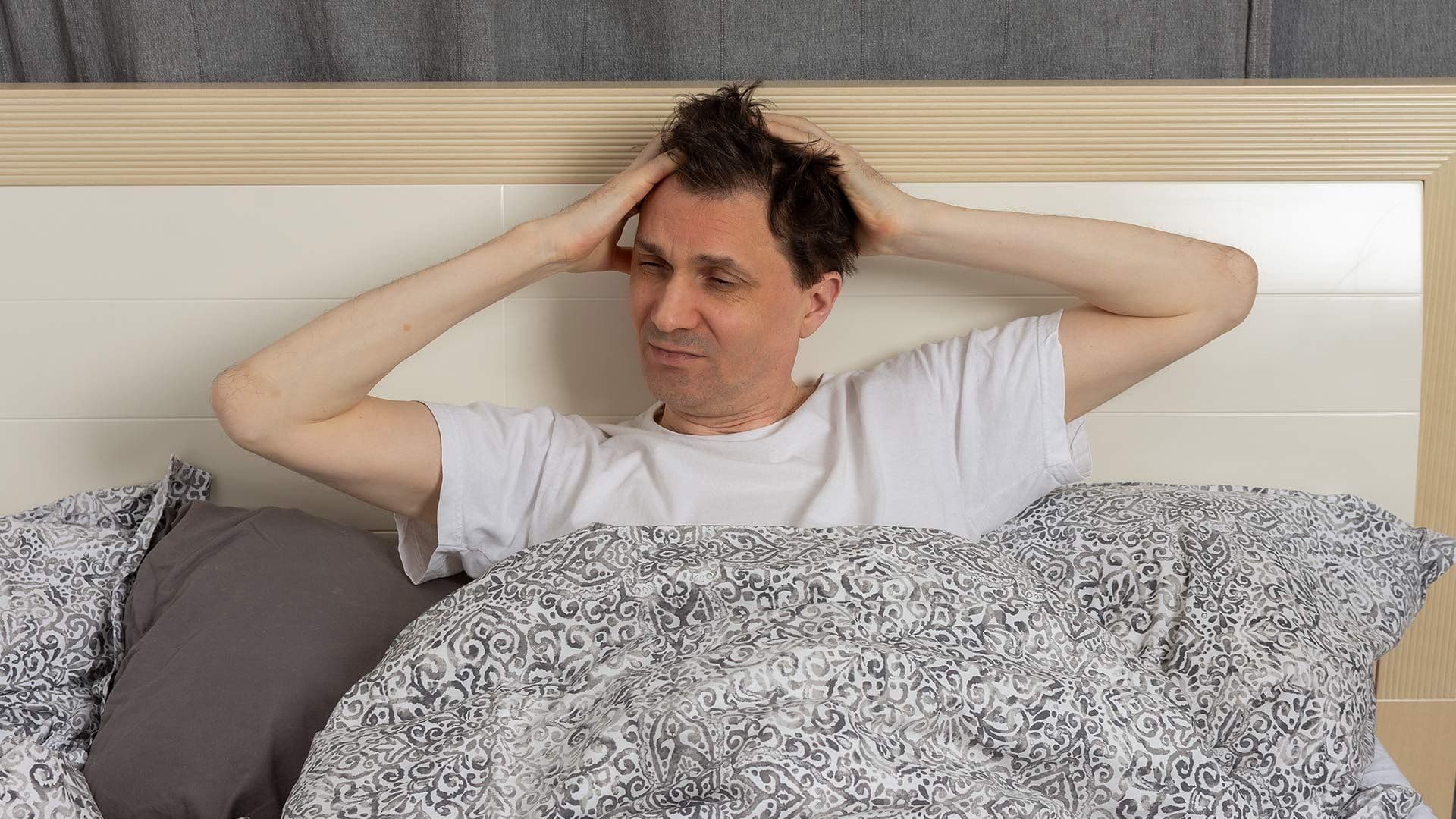
- Studies show that up to 90 percent of people with Parkinson’s lie awake excessively often, and sleep disturbances can occur even before the main symptoms appear.
- Nighttime symptoms may include vivid dreams, difficulty falling asleep and staying asleep, muscle pain, limited mobility, and frequent urination.
- Possible causes include medication wearing off at night, side effects of Parkinson’s medication, depression, sleep apnea, and changes in the brain’s neurotransmitter balance.
- In treatment, doctors primarily rely on medication, but exercise, sleep-promoting foods, good sleep hygiene, and relaxation techniques can also help improve sleep.
Restless sleep, trouble falling asleep, or trouble staying asleep—sleep disturbances are a part of daily life for most people with Parkinson’s disease. According to studies, up to 90 percent of them lie awake excessively often instead of sleeping peacefully. Sleep disturbances can occur even before the main symptoms, such as constant tremors at rest, become apparent. However, sleep disturbances often develop only as the disease progresses. In treatment, doctors primarily rely on medication. But physical activity and eating certain foods are also effective ways to ensure that a good night’s sleep truly lives up to its name.
Our goal here is to provide you with valuable insights so that you can actively address your sleep disorders on your own. We’ll also introduce you to appropriate medications and therapies that doctors use to improve sleep quality.
- What are the effects of sleep deprivation?
Causes of Sleep Disorders in Parkinson’s Disease
- Sleep Disorders in Parkinson’s Disease: Diagnosis
Sleep Disorders in Parkinson’s Disease: Treatment
- Drug therapy
- Behavioral Therapy
Tips for Relieving Sleep Disorders in People with Parkinson’s Disease
- Optimizing Sleep Hygiene
- Make time for regular exercise and sports
- Eat foods that promote sleep
- Active Relaxation
Sleep Disorders in Parkinson’s Disease: Symptoms
Unfortunately, Parkinson’s disease doesn’t just mean that you’ll develop motor symptoms. The disease also comes with other symptoms. Here is a brief list of what exactly lies behind sleep disturbances and what symptoms may occur at night in connection with them:
- Vivid dreams: You experience very intense dreams, especially during the second half of the night. Your body reacts very actively to these dreams (often nightmares) (REM sleep behavior disorder). It’s possible that your arms or legs move so violently during so-called REM sleep (dream sleep) that you unintentionally hurt your partner. Often, these dream images—which feel very real—cause you to talk or even scream in your sleep. Some people unconsciously get out of bed and walk around. In most cases, those affected do not remember the experience the next day—or only have fragmented memories of it.
- Difficulty Falling Asleep: Some people cannot fall asleep because they feel very restless. They experience an unpleasant tingling sensation or even pain in their legs. On top of that, they would prefer to move because they can hardly stand the physical stillness, and so they actually wiggle their legs (Restless Legs Syndrome). If you’re familiar with this inner restlessness, then you know that it’s particularly noticeable when your body is completely still.
- Muscle pain: Severe restlessness often causes the muscles to tense up too much, which can lead to cramping. Muscle pain the next morning is therefore not uncommon among Parkinson’s patients with sleep problems.
- Limited mobility: Do you find it particularly difficult—especially during the second half of the night—to turn over in bed or to get out of bed the next morning? The reason for this is simply that your medications lose their effectiveness at night, and the dopamine deficiency in your brain increases again. The result: muscle stiffness (rigor) and slowed movement (bradykinesia).
- Difficulty staying asleep: Pain, cramps, or even twitching in the arms or legs can be so severe that they keep you awake at night and may make it take a long time to fall back asleep. Difficulty staying asleep is also a characteristic symptom of Parkinson’s disease.
- Frequent Urination: You may wake up often at night because you need to use the restroom. Frequent urination is a common problem among people with Parkinson’s disease and often leads to interrupted sleep.
What are the effects of sleep deprivation?
Lack of sleep, especially when it becomes chronic, places a heavy strain on our bodies. This is because good sleep promotes regenerative and disease-preventing processes in our bodies. Parkinson’s patients, for example, may notice their sleep deficit in that they can feel very tired and have trouble concentrating during the day. The lack of sleep may also make them seem more irritable and depressed. At times, those affected may even nod off spontaneously. Sleep disturbances often exacerbate the motor symptoms of Parkinson’s disease. Fatigue also causes many people with Parkinson’s to become less active—they tend to cut back on sports, exercise, and social activities. This, in turn, often contributes to depression, which can further exacerbate sleep problems.
Causes of Sleep Disorders in Parkinson’s Disease
Do you lie awake for a few hours every night, or does it feel like it takes forever to fall asleep? This is not unusual if you have a central nervous system disorder such as Parkinson’s disease. We’ve compiled a list of possible factors here to help you quickly identify the cause in your specific case:
- The movement disorders associated with Parkinson’s disease, such as twitching or sluggish movements, may be one reason why you wake up at night or have trouble falling asleep in the first place. Background: At night, the effects of the medication wear off, which you may notice as your symptoms worsen.
- However, poor sleep can also be caused by side effects from your Parkinson’s medication.
- Sleep disturbances are very common in depression because the neurotransmitters in the brain are out of balance.
- Sleep apnea (nighttime breathing pauses) causes you to briefly stop breathing while you sleep. When your body detects this malfunction, it essentially wakes you up so you can start breathing again. This has a negative impact on the quality of your sleep.
- Internal restlessness, such as that associated with restless legs syndrome, keeps those affected on their toes and makes it difficult for them to settle down at night.
- Parkinson’s disease causes changes in the brain’s neurotransmitter balance. These changes can rob you of sleep. Other disease-related changes in the areas of the brain that regulate the sleep-wake cycle may also mean that your night’s rest doesn’t quite live up to its name.
Sleep Disorders in Parkinson’s Disease: Diagnosis
Have you been suffering from sleep problems for some time? If so, you should talk to your neurologist about it. After all, in the long run, lack of sleep is not only extremely stressful for your body and mind, but also unhealthy. First, your doctor will ask you detailed questions about your sleep problems, as this is a good way to determine the severity of the issue. You might want to keep a sleep diary to record roughly when you fall asleep and wake up, as well as what activities you engaged in before falling asleep. This could help you and your doctors identify possible causes of your poor sleep.
During a sleep study (polysomnography) in a sleep lab, doctors use various factors—such as movement frequency, heart rate, and respiratory rate—to determine how light or deep your sleep is. Among other conditions, sleep apnea and restless legs syndrome can be diagnosed here.
Sleep Disorders in Parkinson’s Disease: Treatment
Anyone who suffers from long-term sleep problems knows how debilitating the effects of sleep deprivation can be. That’s why it’s especially important to take active steps to address sleep disturbances associated with Parkinson’s disease if you have trouble falling asleep or staying asleep. Feel free to try different approaches, such as: more exercise, switching to a healthy diet, relaxation exercises, and herbal remedies. Of course, it’s also important to identify the cause of your sleep problems so that your neurologist can provide you with appropriate treatment.
Drug therapy
Medication is appropriate if, for example, a person has developed depression and is unable to sleep as a result. In such cases, the temporary use of antidepressants may be considered to stabilize brain metabolism and thereby promote better sleep. If you frequently have trouble falling asleep, short-acting sleep aids might provide at least temporary relief. Patients with restless legs syndrome are often well-advised to take small doses of dopamine-producing medications such as Rotogotin.
Nighttime immobility and muscle spasms can be treated with Parkinson’s medications that have a delayed onset of action. Although these medications are taken in the evening, they do not take effect until hours later (extended-release medications). Alternatively, a transdermal patch can also provide particularly long-lasting relief from symptoms.
Sometimes, however, even changes in Parkinson’s medication can produce the desired results and alleviate the disruptive motor problems. People who suffer from REM sleep behavior disorder with vivid dreaming often benefit from sedative treatment with clonazepam or melatonin. Sleep apnea, characterized by pauses in breathing during the night, can be diagnosed in a sleep lab and then treated with an appropriate device (CPAP machine) to support normal breathing.
Behavioral Therapy
Parkinson’s disease often causes significant distress. People with Parkinson’s are at a higher risk of developing depression than healthy individuals. Behavioral therapy can be an effective way to talk about the condition and learn how to better cope with it. It can help bring about positive changes in the lives of those affected, which often not only helps reduce depression and anxiety but also alleviates sleep disturbances.
Tips for Relieving Sleep Disorders in People with Parkinson’s Disease
However, the treatments described above are by no means the only options available for managing sleep disturbances associated with Parkinson’s disease. There are many other things you can try to help your sleep get back on track. Feel free to try out several of our tips and see if they help you.
Optimizing Sleep Hygiene
Sleep disturbances in Parkinson’s disease can sometimes be caused by very simple things. That’s why we’d like to encourage you to practice good sleep hygiene. This includes making sure the room where you sleep is dark and quiet. The room temperature should be between 18 and 20 degrees Celsius. Establish set times for getting up and going to bed—ideally even on weekends. This will help your body adjust to a consistent sleep-wake cycle. Your mattress should be firm so that you don’t sink in too deeply and so that moving around at night is less difficult. Silk bedding also helps you turn over more smoothly and with less effort.
Avoid known sleep disruptors such as coffee after noon, and don’t drink alcohol in the evening, as it shortens restful deep sleep. Also, avoid drinking large amounts of water in the evening so you don’t have to get up to use the restroom at night. Choose lighter meals in the evening so that digestion doesn’t keep you from sleeping. Try to get between seven and nine hours of sleep each day. If you find that you’ve been lying awake for about half an hour, get out of bed and do something relaxing—for example, read a book, but make sure it’s not too exciting. Go back to sleep when you feel yourself getting drowsy again.
Make time for regular exercise and sports
If you exercise regularly, you can actively help alleviate the motor symptoms of Parkinson’s disease. According to a 2020 study cited in the new Parkinson’s guidelines (2025), intense and regular exercise can help increase sleep duration and optimize deep sleep. This is because exercise—especially endurance exercise lasting about 30 minutes—is effective at reducing inflammation in the body, lowering levels of the stress hormone cortisol, and generally promoting relaxation of the mind and tense muscles.
You can achieve this through activities such as table tennis, jogging, dancing, Nordic walking, or swimming. The important thing is that you enjoy the activity. Even moderate exercise, such as a daily walk in the morning or afternoon, is a wonderful way to feel tired in the evening and sleep better.
Eat foods that promote sleep
A healthy diet is especially important for people with chronic conditions such as Parkinson’s disease. This is because nuts, vegetable oils, ocean fish, plenty of vegetables, fruits, and whole-grain products can, under certain circumstances, promote anti-inflammatory and cell-protective effects in the body or stimulate the production of hormones that help improve sleep. We recommend that you include the following foods in your diet:
- Bananas: This exotic fruit provides the amino acid tryptophan. Tryptophan is a building block for the production of melatonin, a hormone that promotes sleep, which is produced from its precursor, serotonin.
- Nuts: Almonds and walnuts are good sources of magnesium, melatonin, and omega-3 fatty acids. Magnesium has a calming effect and helps muscles relax, while these healthy fatty acids have anti-inflammatory properties. Inflammation can interfere with a good night’s sleep. Simply snack on a handful of walnuts or almonds in the evening.
- Dairy products: Cheese and yogurt also contain tryptophan, which helps promote restful sleep by stimulating melatonin production. These foods also contain calcium—a mineral that plays a role in melatonin production.
- Sour cherries/dark grapes: These delicious dark fruits contain natural melatonin. Studies have shown that sour cherry juice is the most effective. In addition, both fruits have a cell-protective effect due to antioxidant and anti-inflammatory plant compounds such as resveratrol (a flavonoid), which is particularly important for nerve cells in Parkinson’s disease.
- Seafood: Salmon, mackerel, and other fish contain valuable omega-3 fatty acids, which have been shown to have anti-inflammatory effects and may have positive effects on brain function and sleep.
- Valerian: Tea made from this medicinal plant contains soothing compounds, including valeric acids. These cause GABA (gamma-aminobutyric acid) levels in the brain to rise. As more of this important neurotransmitter is released, the feeling of relaxation increases.
- Flaxseeds: They’re a great plant-based source of omega-3 fatty acids—for example, for anyone who doesn’t particularly like to eat fish.
Active Relaxation
Learn a relaxation technique, because with progressive muscle relaxation, autogenic training, yoga, tai chi, or qigong, you’ll eventually acquire the fascinating ability to put yourself into a deeply relaxed state from one moment to the next. Once you’ve mastered these regular exercises, you can use them to help you transition into a calm, sleepy state in bed at night. Ideally, this will help you fall asleep more easily.