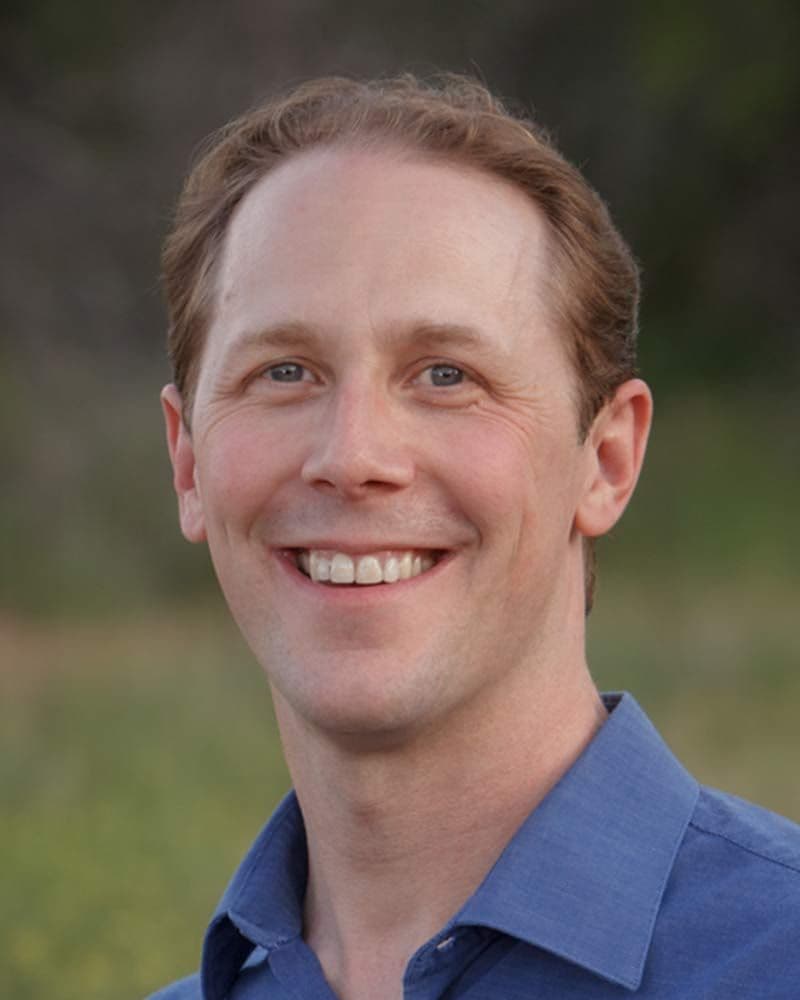
- David Leventhal is the Program Director and a founding teacher of Dance for PD®, a Mark Morris Dance Group program that began in Brooklyn in 2001 at the suggestion of a local Parkinson’s support group.
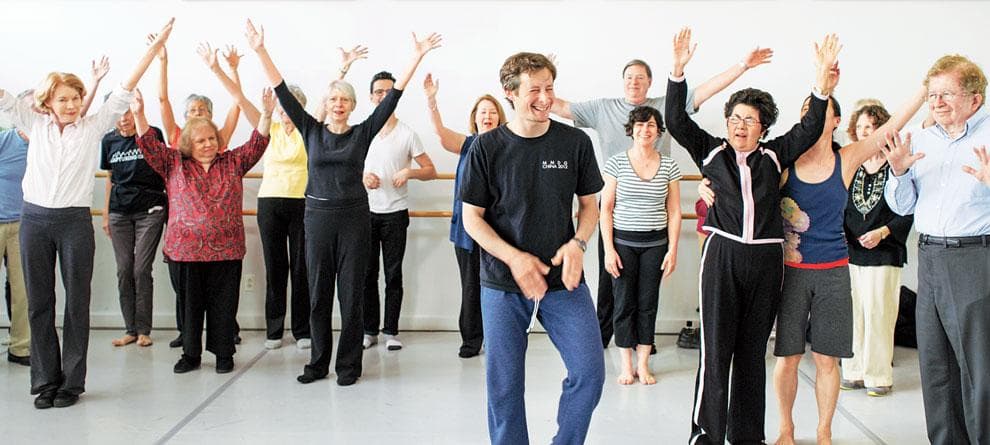
- Dance for PD is not defined by a single dance style: a consistent class structure combines fundamentals like balance and coordination with artistic variety.
- Dance offers people with Parkinson’s dignity, purpose and a way to express themselves — more than movement training alone.
- Music, rhythm and imagery help many participants walk more fluidly and find a sense of flow.
- The program has trained more than 2,500 teaching artists in 28 countries; Leventhal also teaches in Columbia University’s Narrative Medicine program.
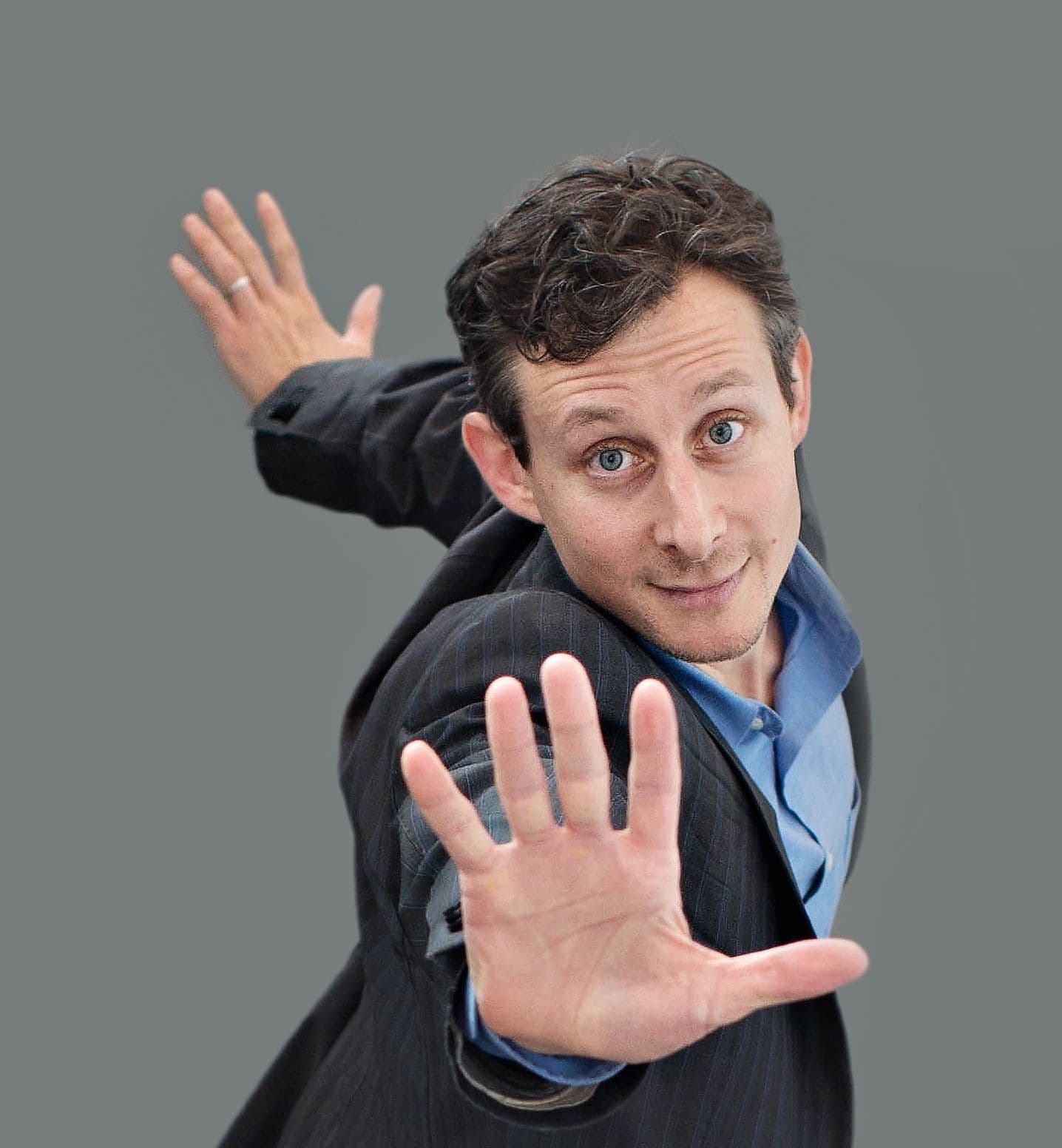
David Leventhal is the Program Director and a founding teacher of Dance for PD®, a program of the Mark Morris Dance Group. A former professional dancer with the company, he has helped shape the method since its inception in 2001 and has trained more than 2,500 teaching artists in 28 countries. His work focuses on bringing dance to people living with Parkinson’s as an artistic, social and embodied experience, and he also teaches a dance-based course within Columbia University’s Narrative Medicine curriculum.
Before we talk about Dance for PD, I would love to learn a little bit more about you. How did dance become such an important part of your life?
I started dancing when I was eight, after a friend introduced me to classes at Boston Ballet. I had always been very active and had done figure skating when I was younger, growing up in New England, where ice skating is a big deal. But dance immediately drew me in. I was hooked right away.
Over the years, I moved in and out of it. There were a couple of years in high school when I did not dance at all, but I eventually came back to it. At university, dance was still part of my life, though not my main focus. I was studying literature. Halfway through college, I decided to try moving to New York, audition and see where it would lead. Within about a year, I auditioned for projects with Mark Morris. I was not in the company at first, but I did some projects with him and was later hired full time.
What first drew you to working with people living with Parkinson’s
It really was that they came to us. Three years after I had started with the company, we opened our new dance center in Brooklyn. One of the people who came to our door in the first months was Olie Westheimer, who was running a support group for people with Parkinson’s. She had a vision for a dance class and thought we were the right organization to help make it happen.
We were open to it because we wanted to serve the community through our building, our structure and our knowledge. But we had no background or experience working with people with Parkinson’s. A lot of the early feedback came directly from the community. They told us what they liked, what they did not like, what was helpful and what was difficult. From there, my colleagues and I began to build a structure for what the class could be.
Originally, the school was not built with that purpose in mind. That was something you added once you started?
Right. The school was really for younger students, adults and professionals who wanted to take classes, and of course it was meant to be a place where the company could rehearse. The Mark Morris Dance Group had started as a small pickup group in New York in the 1980s. In 1988, it was invited to become the national dance company of Belgium and spent three years in residence at Théâtre Royal de la Monnaie in Brussels. When the company returned to New York in 1991, they determined that they needed to have a home. I started working with the company in 1997, so Belgium was before my time.
How did you move from being a professional dancer to teaching dance, and specifically dance for people living with Parkinson’s?
When Olie came to pitch this idea, I was dancing in the company and teaching quite a bit in the community. But my colleague John was lined up to teach the first class. He had a family emergency, so they asked me to substitute for this class.
I was so moved by what happened in that one hour. Without any experience, and without any research basis, I saw a transformation from two o’clock to three o’clock in how people were moving, how they were walking, their facial expressions. Everything just woke up.
There were six people in that first group, ranging in age from about 62 to maybe 78. It was more the typical Parkinson’s age range, not younger-onset Parkinson’s at that point. When the class got larger, we definitely had some younger-onset folks. Now we have quite a few. People are coming into Parkinson’s with much more information about the benefits of movement, so they are starting right away, which is great.
When John came back from taking care of his dad, I said, “John, this is an amazing experience. Can we just do it together?” So, we taught as a team for ten years. John came more from modern dance and improvisation. I came more from the modern-ballet side. Then we had a third teacher, Misty Owens, who came more from jazz and tap. That really became the mix we drew from.
What is the style of Dance for PD?
A lot of people ask that. I would say Dance for PD is not defined by one dance style. It is defined by its flexible design.
There is the structure of the class and what I would call the dose, meaning the fundamental elements. Those include balance, coordination and neuroplastic principles such as complexity, intensity, difficulty, salience, timing and repetition. Then there are things like social connection, cognitive challenge, sequencing movement, spatial awareness, musicality and rhythmic entrainment. Those are the fundamentals, and they can be delivered through many different styles.
It does not matter whether you are doing ballet, hula or salsa. Our class in New York is based on ballet, modern dance, tap, jazz and musical theater. The class in Pune, India, is based on Kathak, Bharatanatyam and Bollywood styles. The question is always, what is emotionally resonant and familiar to the participants? That is what draws people into the movement, because that is what gives the experience meaning. You are not just going through the moves on a treadmill. You are fully engaged in it.
You and John were the founding teachers for Dance for PD. What did that role mean in the beginning, when the program was still taking shape?
In the beginning, it meant that we snuck out of our lunch break to teach a class twice a month, then went back to rehearsals. It was very much wedged in. There were not many other responsibilities aside from teaching that class.
Starting in 2003, we began to teach this class on the road whenever we were on tour. We introduced it to other communities. At that point, we became teachers and ambassadors. People loved the class and wanted to know when they could take it again. Since we often would not return to a city for several years, we began encouraging local dance teachers to pick it up and continue the work in their own communities.
In 2006 and 2007, we started offering training. At first, we said, “We just do what we do. We do not really have a codified structure for it.” But over the years, it has become very structured. We now have an online course prerequisite; a Level 4 qualification approved in the UK and a certification process for teachers who want to use the brand. But even within that structure, it is not style specific. Tango teachers can get certified. People in India using Indian techniques can get certified.
In 2010, our company had the opportunity to apply for a grant to expand Dance for PD and replicate it in more communities. I was still dancing full time, but I had been thinking about stepping away from performing. First and foremost, I felt Dance for PD was on the threshold of becoming a bigger program. I wrote a four-page job description to our executive director and wrote to her, “These are all the things I think need to be done.” The last line was, “In order to do this, I think I would have to stop performing.” She accepted. That was my last year of performing.
In 2011, I took on much more of the administration, including grant writing, fundraising, marketing, teacher training and program development. It is really about cultivating a network.
You are the Program Director. How do you think about your responsibility toward people with Parkinson’s when they encounter the program in very different places and situations?
That is my primary responsibility. Whenever an opportunity or a challenge comes up, my first question is what it will mean for the person with Parkinson’s and what their experience will be.
If someone wants to run a program as part of a university study, I always ask what will happen once the study is over, once the person graduates or moves on, and what that means for the community.
A lot of what I do is gatekeeping with the interests of people with Parkinson’s in mind. How will participants get there? Is there public transportation? Is there parking? What are the bathrooms like? You have to be detail oriented.
From a larger perspective, it is also about maintaining the artistic integrity of what we do. More medical professionals recognize dance as a validated activity, which is wonderful, but sometimes they try to pull it into exercise or other categories they already recognize. Dance is great exercise, and we have the evidence to prove it, but it is other things as well. We do not want to lose those other things.
What did you have to learn about Parkinson’s in order to teach in a way that was both artistically serious and genuinely helpful?
I think the important response is, what am I still learning? It is an ongoing process. It is not past tense.
In some ways, the motor-skill issues related to Parkinson’s were easier for us to wrap our heads around because we are dancers. We understand movement initiation, lack of initiation and restriction. A lot of the learning curve for me was on the non-motor side, things like anxiety, depression and cognitive changes. How might someone with Parkinson’s understand a movement activity based on cognitive issues, functional issues or challenges with episodic memory? And how do we avoid making assumptions?
I also had to understand that what is interesting to us as dancers or choreographers is not necessarily of interest to people with Parkinson’s. We might want to come up with twelve different ideas in one class, almost showing off creatively. But that is not a great approach for this population.
We are much more successful when the second part of class builds on things we worked on in the first part. The material is more constrained, but we get to go deeper and give people a sense of mastery. That, to me, took ten years to learn. People get ownership over the movement, rather than constantly struggling to learn it and then execute it.
What can dance offer to people with Parkinson’s that goes beyond exercise or medical care?
It provides dignity, purpose, meaning and an outlet for expression. Challenges of expression are related to Parkinson’s. People may not move as big. Their voices and facial expressions can be affected. To be in a place where they are encouraged to express their own ideas is an incredible opportunity. We always incorporate improvisation and co-creation into the class.
The power of community is also very strong. People dance with others, look at others, connect, use eye contact, use touch. No matter what your social context is like outside the class, in this class you are welcomed into a community. You are given a sense of belonging. That matters because social isolation and loneliness are two of the biggest challenges for older adults in general, and particularly for people living with Parkinson’s.
There is also the question of identity. Who am I, now that I am living with Parkinson’s? Am I permanently medicalized? Am I a patient? Or is Parkinson’s something I am living with, but not something that takes over who I am?
The arts in general, and dance in particular, can remind people who they are, what is valuable to them and what possibilities are still available to them, movement-wise and expression-wise. In our classes, people begin to talk about themselves as dancers, dance students and, in some cases, choreographers. They take on identities they never would have used before. Yes, they are living with Parkinson’s and dealing with medical issues, but they do not have to identify all the time as a Parkinson’s patient.
Do you notice that the way participants experience their own bodies changes through music, rhythm and imagination? How does that happen?
People talk about finding a sense of flow in their bodies that is otherwise very difficult.
We see people come in who have quite a lot of difficulty walking. But in class, the walking dances are rhythmically precise. There are patterns they can follow, and often they are telling a story or interacting with other people. For that time, many of the motor challenges seem to slip away.
That sense of flow often has an afterglow. It continues after class, as people walk out of the studio and into the street. It does not last for days, but a lot of people say it is as good as taking a pill, if not better. They get a two-to-four-hour feeling-good cycle from it, and with dance, of course, there are no side effects.
Research also reflects this, especially in relation to mood. An eight-month study in Toronto found that Parkinson’s dancers reported lower depression scores, which correlated with lower activation in a brain region associated with depression. To me, that is huge. When people feel better, they are more likely to interact socially, move more during the week and experience less apathy.
What have people with Parkinson’s taught you about movement that you might not have learned in your professional dance company?
Not to take anything for granted, and certainly not movement learning.
I have learned that each of us has an incredible wealth of possibilities in movement, even when that looks limited from the outside. We have people in our classes who are in wheelchairs and may not be moving a lot, but they might be moving with their eyes or with their fingers.
At any level of amplitude, functionality and range, there is an opportunity for conscious, mindful, artistic movement expression. Some people move big. Others may only move their hands, but they do so with the same quality and go through the same artistic creative process.
As dancers, we can sometimes think of choreography as a fixed movement. But choreography is really a qualitative idea that can be expressed at many different points on the spectrum. That is true accessibility and inclusion. Anyone, anywhere on the spectrum of movement ability, can find a path to movement. It may be as simple as moving one’s eyes, or in some cases even imagining movement. I think there is dancing at all levels.
You teach a dance-based course in Narrative Medicine at Columbia University. What can future physicians learn through dance about people living with Parkinson’s that they may not learn from textbooks?
The Narrative Medicine course has two main objectives. One is to help future doctors understand the power of dance to transform the stories of people living with Parkinson’s. They come into a class, dance with the participants, ask questions and have a conversation. They understand firsthand the power of dance as a complement to standard medical treatment.
The other part of the course is to cultivate their own creativity. For their final project, they have to choreograph a dance that transforms the person doing it from one state to another. I would not call it therapeutic dance per se, but they are using dance as a tool to help somebody transform a mindset, a physical challenge or something else that is going on for them.
After more than two decades of this work, what still moves or surprises you in a class?
Every class is a surprise because Parkinson’s is so unpredictable. We work with people for a long time, sometimes 10, 15 or 20 years, so we really get to see changes in them.
It is interesting to see how resilient they are. We cannot stop Parkinson’s. There is some research suggesting that exercise, including dance, can slow progression, but we cannot stop it. Over time, people experience more challenges. But they also develop stronger resilience and determination. They harness different tools to continue participating and to continue being fully engaged members of the community. I am amazed by how hard people fight. It is really inspiring to see.
The surprises for me are also on the side of people acknowledging dance more and more as a complementary form of therapeutic care. There is more clinical interest. We see more medical clinics and Parkinson’s groups reaching out and saying, “We really want dance in our community. We have not had it yet. How do we bring it in?”
What would you like someone newly diagnosed with Parkinson’s to know before joining a dance class for the first time?
There are two messages I want to send out.
The first is that you have to think like a dancer or an athlete when you are living with Parkinson’s. You need seriousness, commitment and cross-training. There is no silver bullet in the Parkinson’s exercise world, no single activity that is going to address every issue.
At this stage, the strongest evidence-based approach people discuss in relation to neuroprotection—protecting dopamine-producing cells from further damage—is high-intensity cardiovascular training, roughly at 80-85 percent of your target heart rate, around 150 minutes a week. But that doesn’t address any symptoms that are already present, and for many people, that cadence is simply not possible, so we also need to focus on neuroplasticity—utilizing movement, behavior and cognitive stimulation the help brain rewire itself
That could mean cycling at moderate intensity. It could be dance, boxing, Tai Chi, ping pong or pickleball. The point is to build a portfolio of activities that support different types of movement. Professional athletes do that. Boxers do not only box, and dancers do not only dance. When I was performing, I did ballet, but also Pilates, weightlifting and cardio, so I could be at my peak.
The second message is that you do not need any skill or talent in the arts to benefit from them. In dance, people often feel vulnerable or worry that they are uncoordinated. But research tells us that dance is good for our brains, our bodies and our social lives, at whatever level we are doing it. In fact, the less experience you have, the more opportunity there may be for your brain to learn patterns and coordinations in the presence of music and social interaction. The more we can share that message, the less intimidated people will feel.