
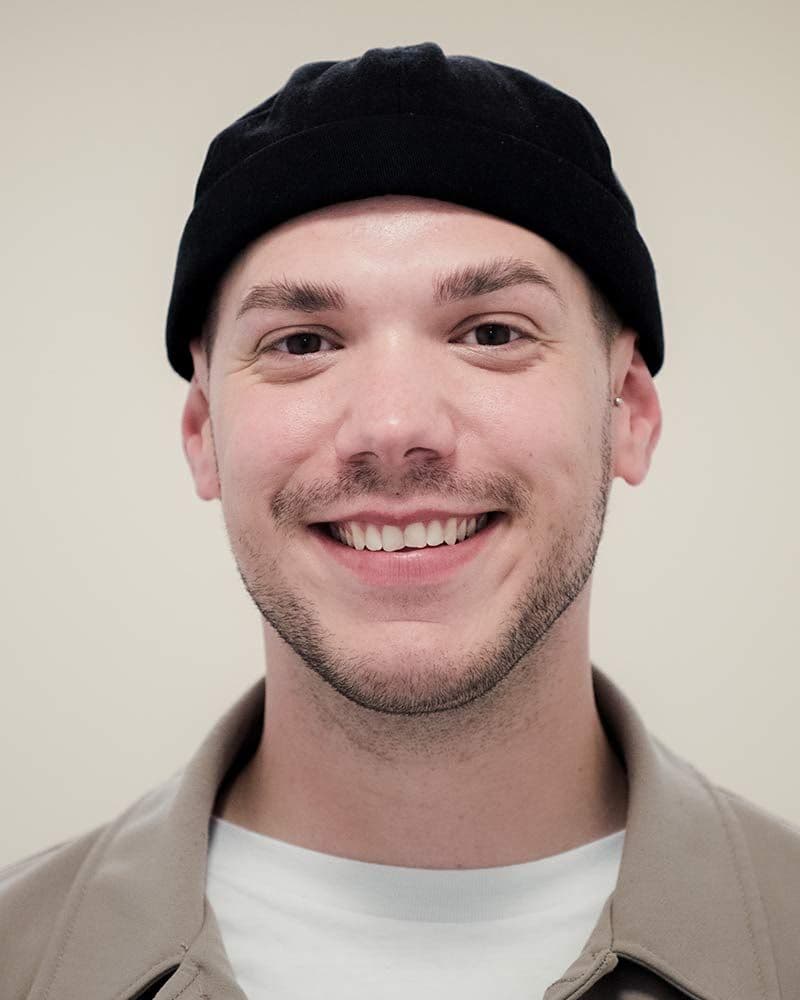
- Tobias Naumann works as an advanced practice nurse in INSPIRE-PNRM+, a German Parkinson’s care study that combines telemedicine with support from Advanced Practice Nurses.
- He sees APNs as a complement to other nursing professionals, taking on tasks such as counseling, case management, interdisciplinary collaboration — and above all time.
- The APNs visit patients at home; a home visit often lasts three to four hours, and at home people are more authentic, more relaxed, and more open.
- The study aims to improve quality of life and care for people with Parkinson’s; a telemedicine platform allows continuous support even at a distance, especially in rural areas.
In Parkinson’s care, nursing can do more than support treatment in the background. Tobias Naumann, an advanced practice nurse in the German innovation-fund project INSPIRE-PNRM+, shows how home visits, listening, case management, and telemedicine can make care more personal and connected.
Mr. Naumann, could you briefly tell us how you found your way into nursing?
Yes, I can. My path into nursing was not a planned decision. It was deeply personal. When I was about 19, my father became very seriously ill and died after a short time. During that period, there was one nurse who left a lasting impression on me. She was empathetic, present, aware of our situation — and simply there. At a time that was almost unbearable for us as a family, she created an atmosphere in which we felt supported.
It was not only her professional competence that impressed me so deeply, but above all her humanity. She did not respond with standard phrases. She saw us as a family, as people with worries, grief, and uncertainty. She allowed closeness without being intrusive. She was present without imposing herself. Back then, I felt how much difference it makes how someone practices their profession — and that nursing is far more than medical care. It is about relationship, and about the willingness to truly engage with another person.
I remember thinking at the time: This person must go home in the evening with the feeling that she has genuinely done something good. She made a difference for us in an exceptional situation. That became a formative example for me. At that point, I did not yet know where I wanted to go professionally. But the image of that nurse stayed with me. When I had to choose a career path, I realized: I want a profession in which I can accompany people and do something meaningful. A profession where you do not simply function, but one that touches you — and gives something back to you as well.
What led you to train as an Advanced Practice Nurse?
I am someone who does not like to settle for the status quo. After my training — or more precisely, after my nursing degree program — it was clear to me that I wanted to take on more responsibility. I originally come from Saarland, a state in southwestern Germany, and completed an integrated nursing degree there. It was already designed as a broad, generalist program, covering adult nursing, pediatric nursing, and geriatric nursing. So from the very beginning, I learned across a wide range of fields — and I realized how valuable that breadth of perspective is.
At the same time, I worked in community-based support services for people with disabilities, accompanying people at home and supporting them individually. That also shaped my understanding of nursing: as something personal, close to everyday life, and deeply responsive to individual needs. Later, I completed a master’s degree in Frankfurt with a focus on digital health and case management, and then worked in gynecologic oncology and obstetrics.
The APN role appealed to me because it brings all of that together: clinical depth, complex care, and at the same time a focus on relationship, communication, and coordination. For me, this is the future of nursing: nursing that takes responsibility, helps shape care, and never loses sight of the person.
What actually distinguishes an Advanced Practice Nurse from other nursing professionals — and how do you experience that difference in your daily work?
I think the most important thing comes first: An APN does not see themselves as someone who “can do more” than other nursing professionals. We see ourselves more as a complement, an add-on that takes on certain tasks that often receive too little attention in everyday nursing practice — for example, counseling, case management, interdisciplinary collaboration, and above all: time.
For me, the biggest difference lies in the expanded scope of competence. As APNs, we bring advanced academic knowledge that allows us to analyze complex care situations systematically and actively help shape them. That means we do not look only at a symptom or an acute gap in care. We look at the patient’s life as a whole, including medical, social, and psychological factors.
That also changes the way I work. I enter conversations differently. I provide counseling on equal footing. I connect people and coordinate closely with other professional groups. My daily work is therefore strongly shaped by dialogue. I listen a great deal, ask many follow-up questions, and compare perspectives. I am convinced that this kind of integrated view is exactly what is needed in a complex condition like Parkinson’s.
What special skills or responsibilities do you bring to the care of people with Parkinson’s as an APN?
As APNs, we bring professional expertise — but above all, we bring time, closeness, and structure. That may sound simple, but in everyday care it is absolutely central. I work with patients who do not only want their medical treatment to be well adjusted. They also want to feel understood — with all their concerns, limitations, and hopes.
We APNs are trained to coordinate complex care processes and act in a person-centered way. That means I help ensure that all the relevant people communicate with one another — from the neurologist to the physical therapist to family members. I suggest therapies, help initiate applications for assistive devices, and make recommendations — always in close communication with the treating physicians and in the patient’s best interest.
At the same time, the person’s social and psychological environment plays a major role. Many people with Parkinson’s experience uncertainty, withdrawal, or even shame, especially at the beginning — and much of it remains unspoken. I try to begin exactly there: by creating a safe space for conversation, making needs visible, and helping people carry their fears. I am convinced that good care consists not only of prescriptions and medications, but also of relationship-based work.
Where do you personally see the greatest value of your role for patients?
I believe the greatest value is that we can truly be there. We visit patients at home and can take several hours to listen. And that changes everything. At home, people are more authentic, more relaxed, and more open. I meet them in their own world — and that also changes my perspective as a nursing professional.
As APNs, we are allowed into patients’ homes. We leave the protected space of the hospital, where we normally set the rules. Instead, we enter someone else’s home — as a guest, with respect and openness. That has given me an entirely new perspective. You are no longer the person in a white coat rushing into the room. You sit at the kitchen or living room table, maybe have a cup of coffee, meet the dog — and learn much more about how people are really doing.
Many patients tell me after the first home visit: “No one has ever spoken with me this intensively before.” Or: “I didn’t even realize I had so many questions.” Especially with a chronic disease like Parkinson’s, with its long treatment journey, it is not only about delivering solutions. It is about creating a space where problems can be expressed in the first place.
I see myself as a companion — someone who is there when things become unsteady. I think that is exactly what many patients long for: someone at their side who sees them, takes them seriously, and does not have to leave again after 15 minutes. For me, that is the heart of my work.
How did you come to specialize in working with people with Parkinson’s?
It was not a conscious plan from the beginning. During my studies, I had some contact with neurological conditions, including Parkinson’s, but honestly, it was fairly superficial. I had the typical half-knowledge: Parkinson’s is the disease with tremor. Of course, I knew names like Frank Elstner and Michael J. Fox, but that was about it.
When I saw the job posting for INSPIRE-PNRM+, something immediately caught me. I read the posting and thought: This is me. This fits me perfectly. It was about person-centered counseling, case management, independent work, home visits, and personal responsibility — exactly the topics that motivate me.
You are currently taking part in INSPIRE-PNRM+, a Parkinson’s care study within ParkinsonNet RheinMain+, a regional care network in western Germany. The project combines telemedicine with support from Advanced Practice Nurses. Could you explain what the study is about?
The project has a very clear goal: to improve quality of life and care for people with Parkinson’s by using Advanced Practice Nurses in a more targeted way. We accompany patients over the course of one year and look closely at how they are doing and what they need — medically, from a nursing perspective, and psychosocially.
What makes this study special is that we APNs do not simply accompany patients. We also act as coordinators who observe, advise, and help connect the dots. We work closely with physicians, therapists, and of course with patients and their families. The goal is to think about care as something coordinated from one place while shaping it through interprofessional collaboration.
A central element is our telemedicine platform. Many contacts, agreements, and updates run through it. That is a real advantage, especially in rural areas, because it allows us to provide continuous support even at a distance. The larger goal is to make care more person-centered, connected, and sustainable — and to provide scientific evidence that this approach works. If we can demonstrate a positive effect on care, this kind of therapy support could be integrated into routine healthcare and offer major benefits, especially for people in underserved rural areas.
As part of the INSPIRE study, you completed 300 hours of additional training. Which topics were central — and what did you personally take from it?
This additional training was an incredibly enriching experience for me — and I think for all of us. One major focus was navigating Germany’s social support and benefits system: What are people with Parkinson’s entitled to? What benefits can they apply for through disability support services or Germany’s long-term care insurance system? How do patients access rehabilitation, assistive devices, or support services? This is often a jungle that many people can hardly navigate on their own — and that is exactly where we come in.
Another major focus was pharmacotherapy and pathophysiology: How does Parkinson’s work in the body? Which medications are available? How do symptoms develop over time? Especially when working with complex conditions, it is important not to rely only on experience, but also to be able to reason from a solid medical foundation.
Telemedicine was another key topic, because the study uses a digital platform. We learned how to provide digital counseling professionally and how to build trust even at a distance. There were also modules on communication, conflict resolution, and counseling techniques — all designed to strengthen us for the many different situations we encounter in daily practice.
What I personally valued most was that it was not only theoretical. We stayed in a conference hotel in the middle of the forest and spent three days together almost every week, including overnight stays. We grew together as a team and learned a great deal from one another. A real network developed, and I still draw on it regularly today.
What exactly is your role in the project, and what does your workday look like in this context?
My daily work is very varied — and honestly, rarely predictable. I usually start the morning by checking whether new patients have been entered into our telemedicine platform. If so, I get in touch, schedule home visits, and plan the next steps. Then I get in the car, because our service area covers the German states of Rhineland-Palatinate and Hesse, as well as parts of Saarland. It can happen that I drive two hours to be with someone in person.
A home visit often lasts three to four hours. We collect a lot of information — from motor symptoms and quality of life to comorbidities, medication plans, and care needs. And we talk about everything that matters in daily life. Afterward, I write a care plan, make recommendations, and coordinate with the treating physicians.
Depending on whether the person is in the intervention group or the control group, I then continue to support them regularly — by video or phone and with a final home visit at the end of the study.
Can you share an example from your work that shows how much small changes in nursing practice can achieve?
One case comes to mind immediately, and it moved me deeply. It involved a patient who was in a profound crisis — physically and emotionally. He was in pain, felt cognitively limited, and no longer felt life-affirming. He was tired of daily life, tired of the disease.
I sat down with him — not just for half an hour, but for a long time. Late into the evening, I sat at the computer and wrote a detailed care plan with everything I could suggest: therapy options, contacts, assistive devices, and support services. I wanted to show him that he was not alone and that there were ways out of that hole.
A few days later, he wrote to me: “I never would have thought that so much was still possible in my condition.” He thanked me — not only for the ideas, but for the energy I had put into it. That feedback touched me deeply. Because I knew: For him, I had been exactly what that nurse at my father’s bedside had once been for me.
Why do you think it is important to advance nursing in a research context as well?
Because nursing cannot stay where it is. The world is changing. People are living longer, often with more complex conditions, and they are staying at home longer. And yet nursing is still often thought of the way it was 20 years ago. That no longer works. We need new concepts, new roles — and we need to ground them in research.
The INSPIRE study is exactly that kind of model project. It shows that nursing does not only react; it helps shape care. Nursing is not just a service. It is structured relationship work.
And to be honest: If we do not research and demonstrate what we do ourselves, no one else will do it for us. Nursing has to become more visible — not only at the bedside, but also in numbers, data, and studies. That is the only way we can change things in the long term.
How do you experience collaboration with the other professional groups involved in the project?
Very enriching — and sometimes challenging. We work with neurologists, primary care physicians, therapists, social services, family members, and many others. Naturally, different perspectives and ways of working come together. But that is exactly what makes it exciting. I have the sense that our role as APNs is increasingly recognized and valued, precisely because we have such deep insight into patients’ everyday lives. We can provide information that often gets lost in the rushed reality of daily clinical practice.
I experience interprofessional collaboration as a real gain for everyone involved. But it only works if people listen to one another, build trust, and communicate openly. And that is something we work on every day.
How do patients respond to the more intensive support from an APN? Do you notice a change?
Oh yes, absolutely. Even the first phone call is telling. I say, “Good morning, my name is Tobias Naumann. I am an Advanced Practice Nurse, and I would like to visit you. The appointment will take about three to four hours.” The first reaction is almost always: “What? That long?” Many people simply cannot imagine that, in today’s healthcare system, someone wants to spend that much time with them — or actually can.
But once I am in people’s homes, I can feel something shift. A space opens up in which, finally, everything is allowed to be said. Topics come up that get lost in daily life or for which there is no time during a regular doctor’s appointment.
I believe many patients experience our support not simply as a medical service, but as human support on equal footing. And that makes an enormous difference to me.
What do you hope for the future of nursing in Parkinson’s care, especially with regard to the role of APNs?
Above all, I hope we can bring the positive experiences we are currently having in the study into routine healthcare. I hope it will not remain a model project, but that in a few years it will be normal for people with complex conditions like Parkinson’s to be supported by specialized nursing professionals — continuously and across the country.
I also hope that we as APNs will receive more autonomy — for example, the authority to prescribe certain medications or assistive devices without always having to go through a physician. Of course, that would have to happen within clearly defined frameworks. But it would simplify many things, especially for patients who have little drive or are already under significant strain.
And I hope that our role as nursing experts will be recognized not only in the context of projects, but across the entire healthcare system. That people understand we are not competition, but a valuable resource. We can relieve pressure, coordinate, support, and provide care. And above all, we bring the person back to the center.
Is there anything you would like to see from policymakers or institutions to make nursing on equal footing possible?
Yes, absolutely: more structural support. It is not enough to praise nursing in speeches or applaud nurses in parliament. Appreciation has to show up in better pay, better working conditions, and standardized curricula. It cannot be the case that every university runs its own APN model and in the end no one knows exactly what the title means.
What we need for the care landscape is a real skill mix: traditional nursing professionals, specialized APNs, and medical professionals — all with clearly defined tasks and competencies. And we need political frameworks that make this possible, through co-financed positions, legal recognition, and academic standards.
Finally, if you could give one piece of advice to a young person considering nursing, what would it be?
Bring strong nerves. Stay open. Stay empathetic. And above all: Do not be afraid of closeness. Allow yourself to engage — with people, with life stories, and with situations that challenge you. Nursing is not a profession you simply “do.” It is a profession you live.
I believe you can learn so much in this field — not only professionally, but above all as a human being. You grow through the encounters and through the responsibility. And you receive so much in return: trust, gratitude, and genuine connection.
Of course, it is not all rosy. Nursing is demanding, sometimes frustrating, and often emotionally heavy. But it is also incredibly meaningful. Once you have felt what it is like to truly help someone — not in an abstract way, but in a very concrete one — it stays with you.
So I would say: Give this profession a chance. You will not regret it.
Thank you very much for this thoughtful conversation. We wish you all the best in your work and continued success with the study.