- Molly Cupka founded Up ENDing Parkinson's, a nonprofit that offers free climbing to people with Parkinson's. Since it became a nonprofit in 2022 it has worked with more than 80 partner gyms across the US.
- It began in 2012 with Jon, a retired anesthesiologist with Parkinson's whom other gyms had turned away. Private sessions grew into a free weekly group.
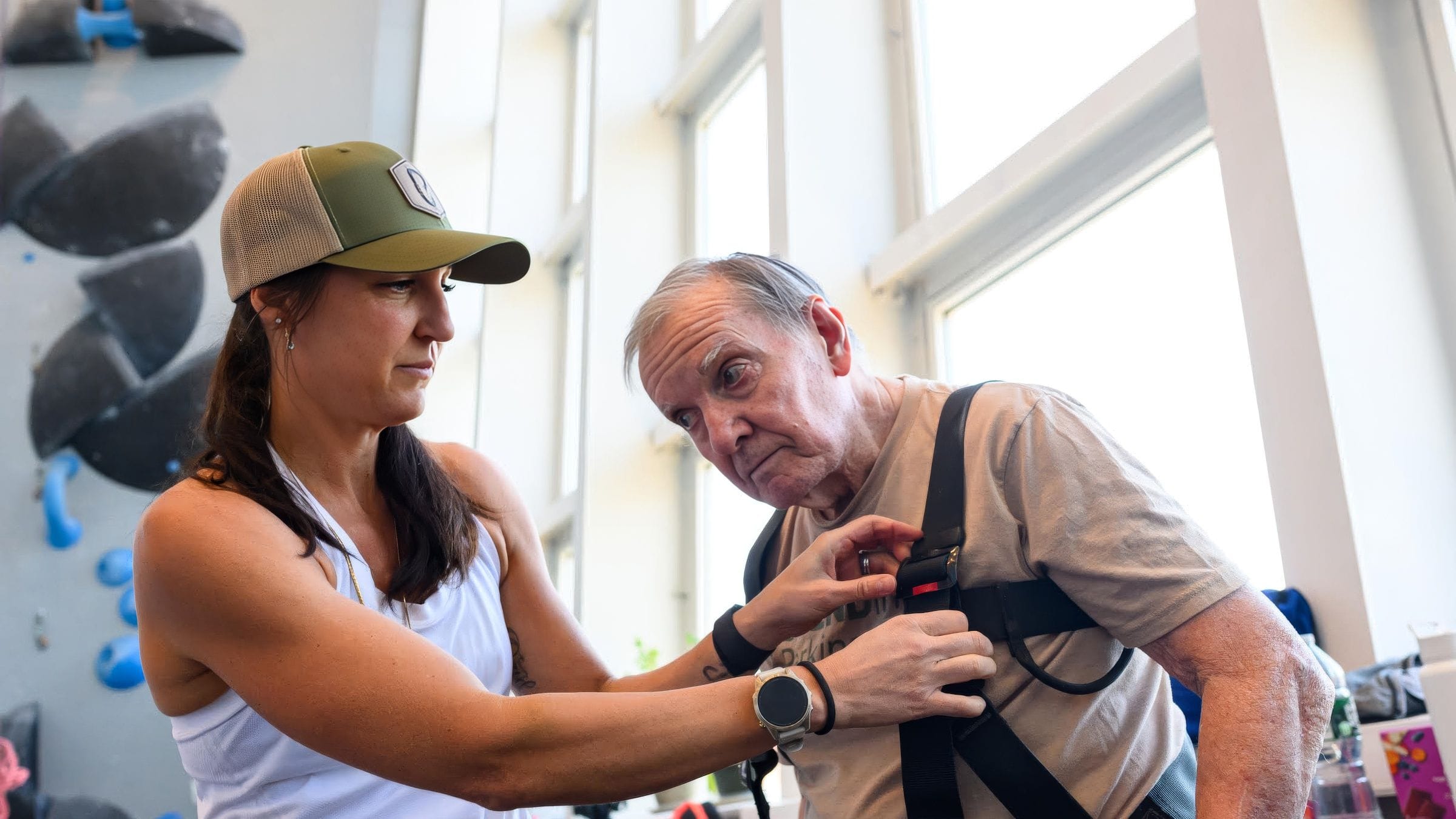
- Rope and harness take away the fear of falling. That lets many people push themselves harder than in other activities — and climbing combines balance, strength, mobility and constant problem-solving.
- In Cupka's experience freezing is extremely rare on the wall; the many visual cues appear to help. Some participants report their tremor stays improved for around 24 hours after a session.
- The biggest change is confidence: participants who started out quiet often end up welcoming newcomers and advocating for the programme.
Molly Cupka on how climbing challenges expectations, strengthens confidence and builds community for people living with Parkinson's
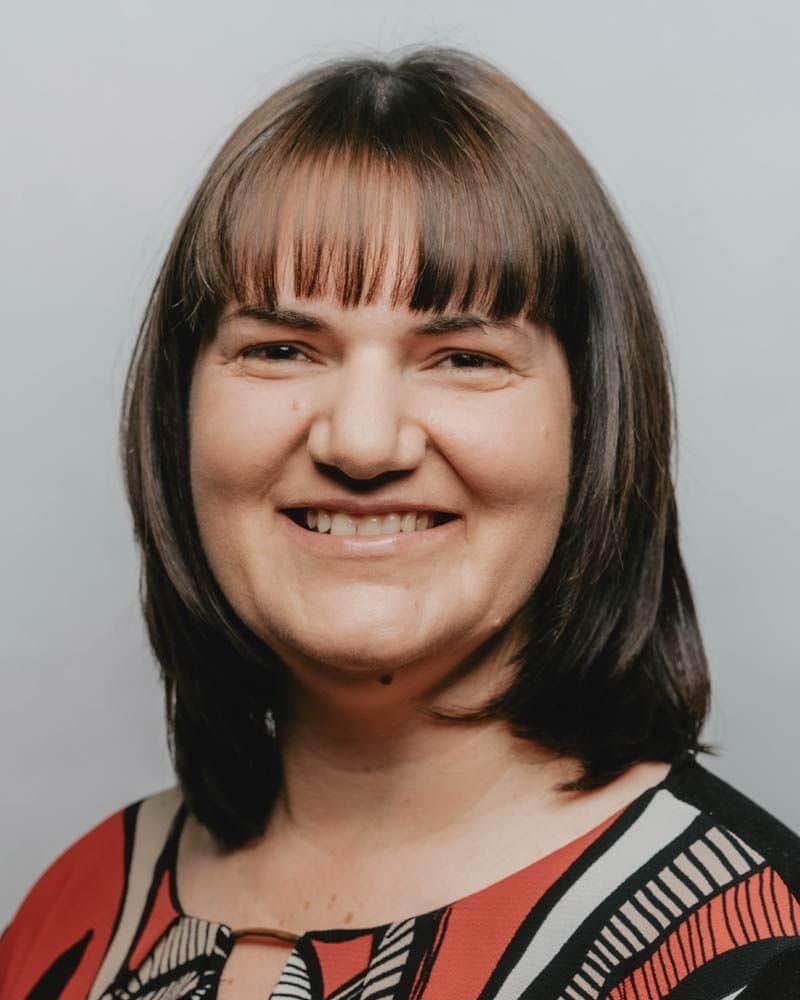
Molly Cupka is the founder of Up ENDing Parkinson's, a nonprofit organization that supports free climbing opportunities for people living with Parkinson's. A former competitive swimmer, she discovered climbing in college and later spent many years working at Sport Rock in Alexandria, Virginia. After meeting Jon, a retired anesthesiologist with Parkinson's who wanted to climb, she began developing a group program. Up ENDing Parkinson's became a nonprofit in 2022 and, at the time of this interview, operates in over 80 partner gyms across the US.
Molly, could you tell us about your background and what led you to this work?
I was a competitive swimmer for many years. When I stopped swimming, I needed a new challenge, so I tried climbing. I loved it immediately and became obsessed with it. I started working at my college climbing gym about two days after taking the introductory class. After college, I moved back to Virginia, closer to where I grew up, and spent many years working at Sport Rock in Alexandria.
One of the best parts of that job was watching new people fall in love with climbing. It used to frustrate me when parents in their thirties or forties came in with their children and said they were too old to try it. At the time, I was about 25 or 26, so I did not have much credibility when I told them they were not too old. Now I am 43, and I work with climbers in their nineties.
How did you become interested in adaptive climbing?
At Sport Rock, I worked with autistic children and their families, as well as people with physical disabilities, including people missing an arm or a leg. Those groups opened my eyes to how adaptable climbing can be. With top-rope climbing, the rope provides a high level of security, and the activity is not particularly hard on the joints. I began thinking that older adults should have the opportunity to climb as well.
How did your work with people living with Parkinson’s begin?
In 2012 John, a retired anesthesiologist around 55 years old, contacted the gym. He had approached other local gyms and had been turned down, although I do not know exactly why. It may have been because he wanted to climb early in the morning and they did not have anyone available to work with him.
I was immediately interested because climbing requires so much neurological work. You have to think constantly while you move. I did not know much about Parkinson's at first, so I took a course about the disease and exercise. I was amazed by how closely climbing matched the things the course emphasized, including movement, balance, flexibility, strength and thinking. I came away convinced that climbing was an unusually good match for Parkinson's, and John agreed.
How did the program grow from one person to a group?
Jon climbed with me three times a week in private lessons. He wanted to come every day, but I told him to slow down because he might hurt himself. We invited his physical therapist to come in and see what we were doing. She tried climbing herself, thought it was exciting and encouraged us to develop the idea. I also spoke to Jon's neurologist, Dr. Falconer, who is now on our board of advisors. He told me that I should do something with it. That gave me the confidence to invite other people.
We started a free weekly group at Sport Rock on Thursday mornings. We put a flyer in a physical therapy office and initially attracted three or four people. Friends who climbed volunteered to belay. The group had a wonderful dynamic, with a lot of friendship and laughter.
At first, however, many people thought the idea sounded crazy. At events, people with Parkinson's and even neurologists would come to our table, see that it was about rock climbing and immediately walk away. It took a great deal of convincing before people began to see it as a serious option.
How did the organization become a nonprofit, and what does the name Up ENDing Parkinson's mean?
I did not establish the program as a nonprofit until 2022. The original working name was Cerebral Climbing, but my husband felt that it sounded too scientific. We brainstormed for a long time, and I think he may have come up with the name Up ENDing Parkinson's. He is very interested in branding and wanted the name to have more than one meaning.
The word reflects several ideas. Climbers go up, the program upends expectations about what people with Parkinson's can do, and the word 'end' points to challenging the stigma surrounding the disease. We are not a cure for Parkinson's, but we can challenge the assumption that a diagnosis means someone can no longer do certain things.
How would you describe the organizations mission today?
I want the program to be available in every community where there is a climbing gym and someone who wants to climb. Expansion is a balancing act. I could continue opening new locations, but I also need to make sure the existing programs are well supported. It takes time to build trust with neurologists, physical therapists and local Parkinson's communities. When I went to St. George, Utah, for example, I felt as though I was back at the beginning because most people there had never heard of the idea.
Are there also programs outside the United States?
Up ENDing Parkinson's is not technically an international nonprofit, and I am still learning about the legal requirements involved. I have worked with Ton in the Netherlands, who wanted to bring the idea there. He has established a nonprofit with about seven or eight locations. We have also discussed a possible program in the United Kingdom. We plan to include international partner locations on the map on our website using the appropriate legal designation, even when they do not operate directly under our nonprofit.
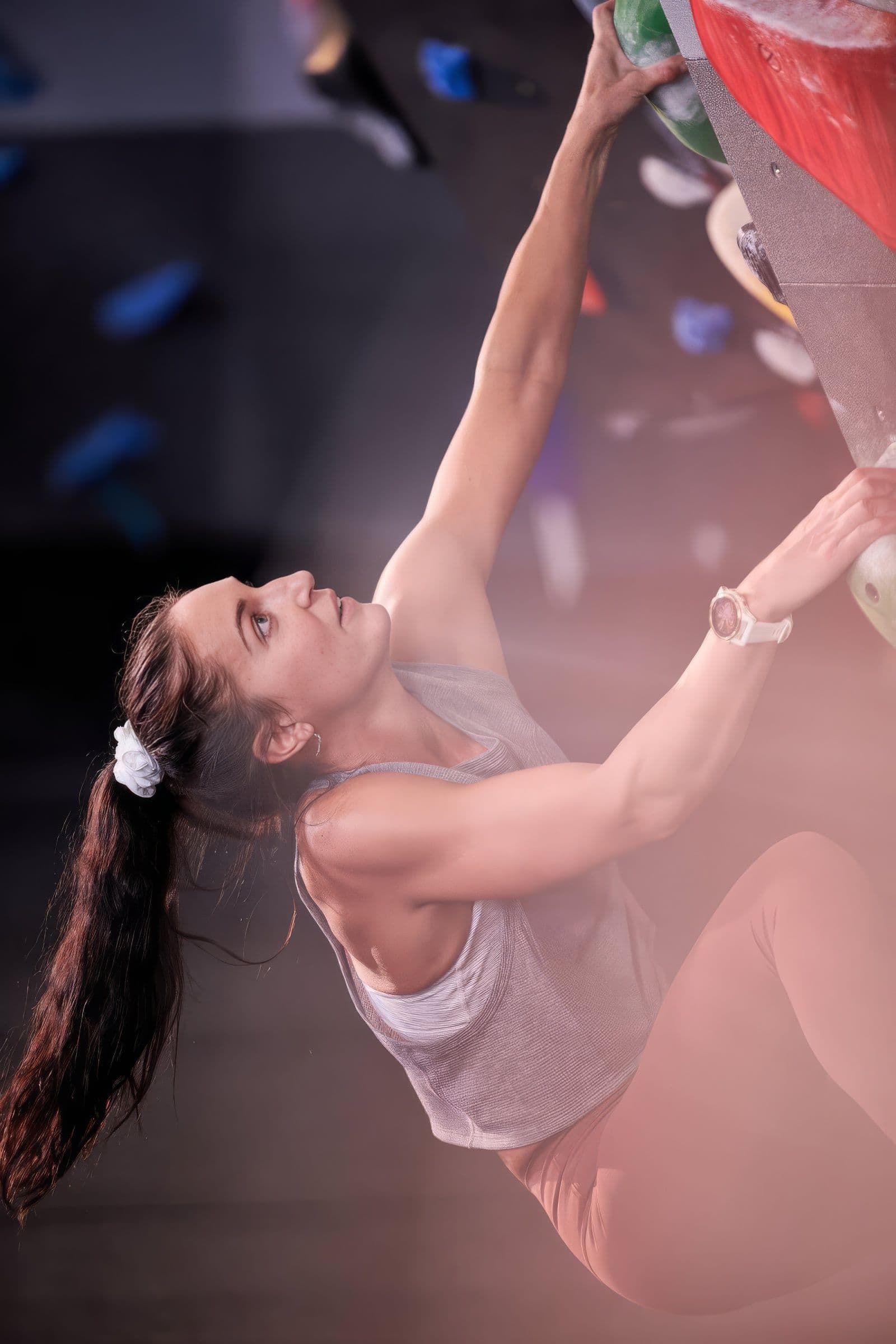
What makes climbing different from other forms of exercise for people living with Parkinson's?
The rope and harness make a major difference. They reduce the fear of falling and allow people to challenge themselves more than they might in another activity. Climbing also requires a great deal of problem-solving. Bouldering routes are called problems because climbers have to work out how to move their bodies through them.
It also demands intense concentration. When you are on the wall, you cannot really think about work or anything else. You have to focus on what you are doing. Physically, climbing involves the whole body, from the toes and fingertips to the core. It requires balance, flexibility, strength and the ability to shift your weight. It can also stretch the body and is relatively gentle on the joints.
The social aspect is equally important. Climbers cannot climb continuously, so they rest, take turns, talk and encourage one another. Social interaction is built into the activity. Many people in our program become regular members of the gym, climb outside the group and join other clubs there. They are not separate from the climbing community. They are part of it.
How do symptoms such as tremor or freezing of gait show up during climbing sessions?
Tremors vary greatly. For many people, the tremor lessens or stops while they are gripping a hold, although it may still be visible as they reach for it. Some people tell me that their tremors remain better for about 24 hours after climbing. Others say the tremor becomes worse for an hour because they are tired and then improves. The experience is different for each person.
Freezing on the wall is extremely rare. I think the many visual cues on the wall may help. We sometimes use a laser pointer to indicate the next hold and guide a hand or foot. Initiating the movement may still be slower or more difficult, but freezing itself is something I have seen only very rarely while climbing.
Slowness of movement, or bradykinesia, may be one of the greatest challenges. At paraclimbing nationals, bradykinesia is not yet included in the classification criteria. I am advocating for that to change because climbing slowly is very difficult. It is like doing a slow pull-up instead of using momentum.
What does a typical session look like, and how do you accommodate different abilities?
Sessions vary from one location to another. From the beginning, I did not want to over-adapt the activity. The idea was that people would climb like everyone else. At the original gym, the sessions are very informal because the group is large and well established. People arrive at different times and may spread out across several rooms. They know the warm-up exercises, but they do not always warm up together. Smaller locations are more likely to begin with a group warm-up.
We have a warm-up video that was developed with a physical therapy office. After warming up, climbers pair with volunteers who belay. New participants usually begin on slab walls and on routes that the volunteer considers suitable. If someone moves up a route easily, the volunteer suggests something more challenging. Routes of very different grades can be next to one another, so people with different abilities can climb together in the same part of the gym.
What are the biggest fears new participants have?
The two main fears are that they will not be able to do it and that they will be afraid of the height or of falling. The fear of not being able to climb is usually the easiest to overcome. Almost everyone does more than they expected, even if that means reaching only two or three holds on the first attempt.
Fear of heights takes more time. People can start by climbing only a short distance and then come down. They can gradually go higher over several sessions. I have a fear of heights myself, so I understand it. Some days are easier than others, but repetition helps.
What changes have you observed in participants, both on and off the wall?
Confidence is one of the biggest changes. People who were timid and quiet when they started often become advocates for the program and welcome new participants. One woman who had always been quiet and shy told me that she had almost stopped speaking altogether and felt as though she was disappearing into a hole. She is still quiet, but now she talks with people throughout the gym. She says climbing has completely changed her life.
People from other locations also send me videos of themselves walking before and after a session. I am not qualified to analyze changes in gait or arm swing, but they feel that they are walking better, and that matters to them. One early climber also told me that a score from one of his regular medical assessments had improved after about a year of climbing. According to him, his doctor had not seen that happen before.
What have research and practical experience taught you so far, and which questions about climbing and Parkinson’s still need to be explored?
Our first pilot study included only three people, so it was too small to support statistically meaningful conclusions. However, all three participants felt that they were doing better. A larger follow-up study tested a range of physical and psychological measures before and after a period of climbing and showed significant positive changes on the physical measures.
The psychological measures had a ceiling effect because many participants already scored at or near the maximum at the beginning. The people who volunteered were also particularly motivated and may not have represented the wider population of people with Parkinson's. I would therefore like future research to examine the psychological effects of climbing in a different way.
I would also like to see research on climbing for people with Parkinson's-related dementia and other forms of dementia, including Alzheimer's disease. My observations are anecdotal, but I have seen people who spoke very little begin initiating conversations and responding more actively. Their spouses have also noticed striking changes. I would like those experiences to be studied systematically.
What has been most challenging about expanding the program?
Money is probably the biggest challenge, followed by finding participants for new programs. The sessions are free for climbers, but climbing gyms are for-profit businesses and need to be compensated. The program is supported by donations and, in some cases, grants.
If we had more funding, we could pay one staff member at each gym to help run the program. I value the volunteer-led model and would not want to lose it, but having one reliable paid person at each location would make new programs much easier to establish. Recruiting enough climbers in a new city can also be difficult. The people are there, but reaching them and earning their trust takes time.
Where would you like Up ENDing Parkinson's to be in the future, and what would you tell someone with Parkinson's who is considering climbing?
Ideally, when someone contacts us and says they want to climb, we will simply be able to direct them to a nearby gym and show them where to sign up. My goal is for the program to be available in 50 percent of climbing gyms in the United States.
To someone with Parkinson's, I would say that you can probably do more than you think. Just show up and see what happens. Even if you initially come only to spend time with the group, the social aspect has value. You do not have to know in advance how much you will be able to do. Try it and find out.