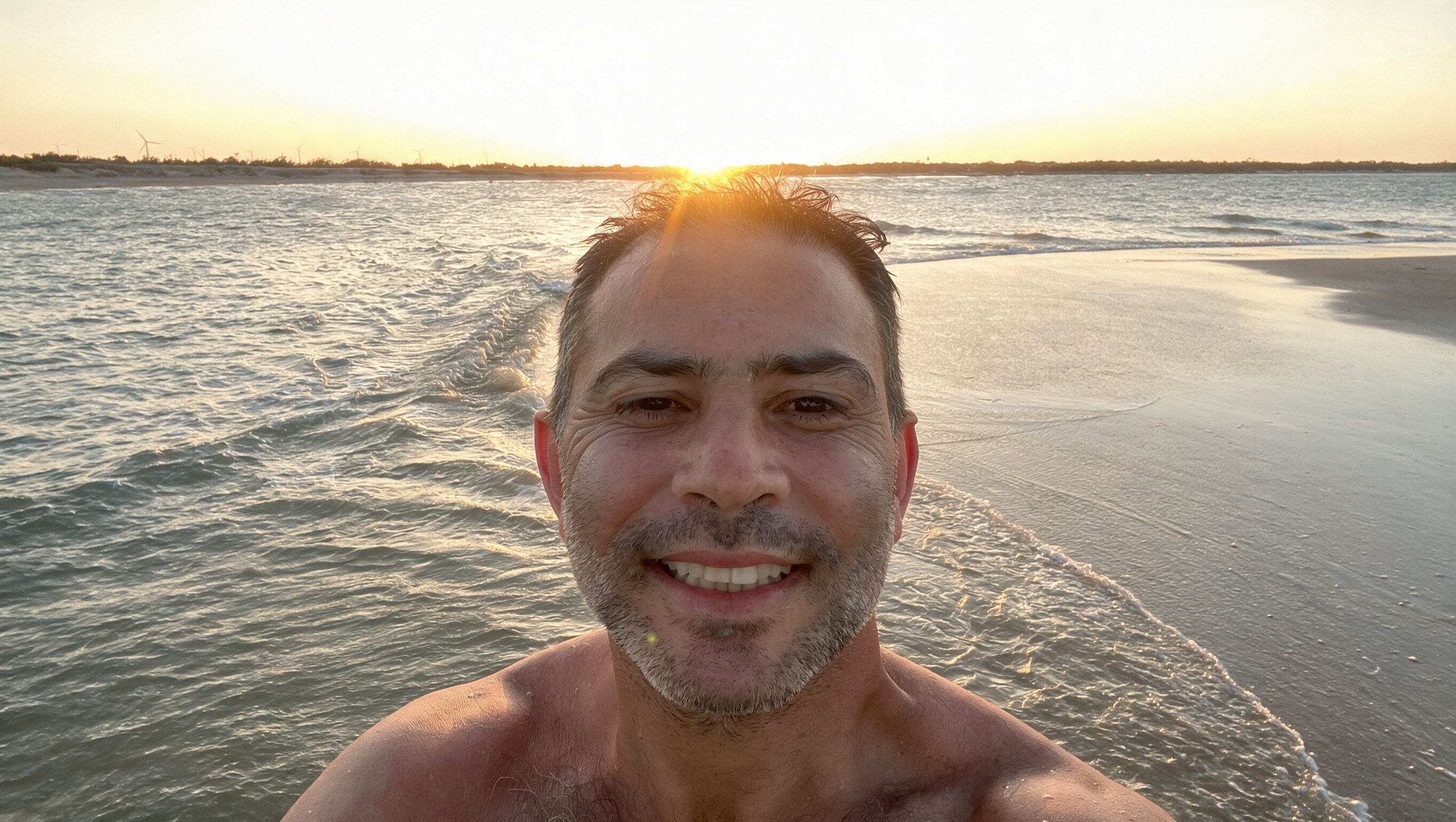
- André Tal is a senior TV reporter in Brazil. As a correspondent in Asia and Europe he covered the tsunami in Japan and the 2015 Paris attacks, among many other events.
- The diagnosis came one week after his 40th birthday. Fearing for his career, he hid the condition for years — until he opened up on national television in 2021.
- The story about his life was nominated for the International Emmy Awards in 2022 and is regarded in Brazil as a milestone for global Parkinson's awareness.
- Deep brain stimulation was the most significant medical step for him: afterwards he could stop taking levodopa, and the dyskinesia he used to have badly disappeared.
- He trains six to seven days a week and sees it as one reason he is still active, independent and able to work.
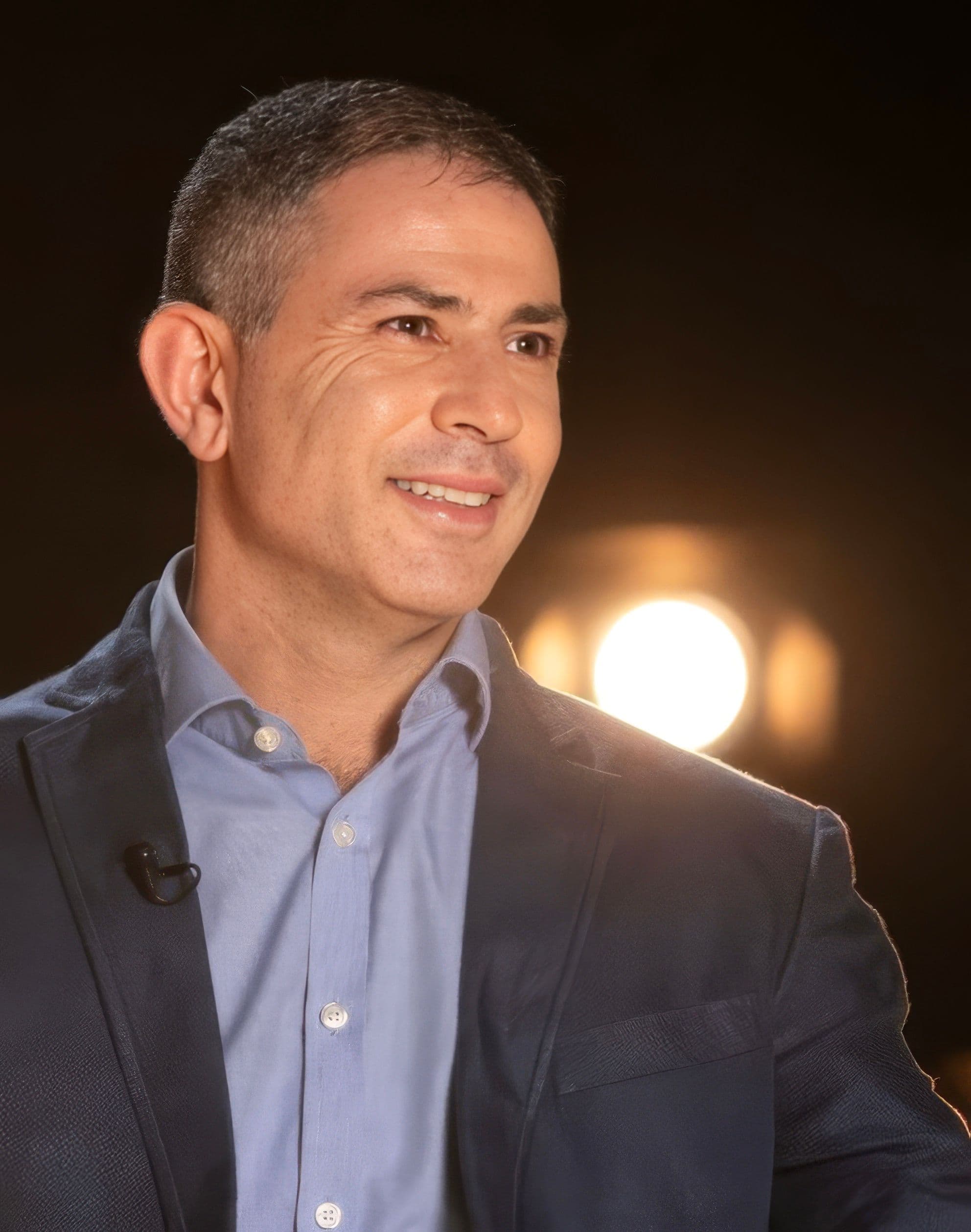
André Tal is a Brazilian TV senior reporter. He is former correspondent in Asia and Europe, covered big news, sports and political events all over the world.
He was diagnosed with Parkinson’s one week after his 40th birthday, seven years ago. At that time, he was living in London and shortly moved back to Brazil.
He didn’t open about the disease till 2021, when he decided to break the silence on national TV. The story about his life was broadcasted to millions of Brazilians and the piece was nominated for an Emmy award.
André still works as journalist on TV news where he continues to inspire people with and without Parkinson’s showing his resilience and strength as a husband, father, professional and amateur athlete.
Which experiences from your career have particularly shaped the way you look at people, crises and personal stories?
I have covered many major events around the world, such as the tsunami in Japan or the terrorist attack in Paris in 2015 and also many human stories. Looking back, these experiences shaped not only the way I report, but also the way I meet people in difficult situations.
What I learned over the years was how to speak to people and more than that, how to listen to people. That ability to listen has become very important to me. It changes how you approach a person, especially when they are going through a crisis or telling something very personal.
When did you first notice that something was changing physically, and how did you interpret those changes at the time?
One thing I remember is that I had lost my sense of smell many years before the diagnosis. At that time, I did not really connect it with Parkinson’s. Later on, I noticed my left arm wasn't moving much and then I was also shuffling my left leg. At that time, I was living in London and could not get an NHS appointment quickly enough, so I decided to fly to Brazil and see a doctor there.
During the examination, I mentioned that I had lost my sense of smell many years ago and some people with Parkinson’s lose their sense of smell. That symptom now made sense.
How did you experience the Parkinson’s diagnosis, and what was most difficult in the first weeks, months or years afterwards?
The diagnosis was a very dramatic moment for me. It felt as if a black curtain came down before my eyes. I started to cry. I had just turned 40, I had two children, and one of them was still a baby. At that moment, everything suddenly felt very uncertain.
Parkinson’s was also not completely unknown to me, because my grandmother had it as well. That made the diagnosis even more frightening. In the beginning, as a public figure and as a journalist, I did not want to open up. I did not know how people would react. I was afraid of what could happen at work, whether people would make jokes, treat me differently, or even fire me.
So I tried to hide it for years. But people began to notice. They started talking behind my back about the way I walked and said things like: “Something is wrong with him.” When people asked, I would simply say that something neurological might be going on, but I still did not open up.
What has changed in your everyday work as a reporter, and what has stayed the same?
I still work full-time, and that matters deeply to me. Some symptoms are invisible to other people, others are not. Sometimes I doubt whether I will be able to something, but then I focus and do it.
Keeping a sense of normal life is essential to me. Nine years ago, I was happily married, a proud father of two beautiful boys, a successful journalist and financially stable. And today, I am still all of that. The only difference is that I have limitations.
That is how I try to see Parkinson’s in my life: as a supporting character in my life, never as a protagonist.
When did the idea first arise for you to speak publicly about living with Parkinson’s?
The turning point came when I found an experimental treatment in the U.S. It was a treatment with a Brazilian doctor who was doing heat-shock protein induction. That gave me a concrete reason to tell the story publicly, not only as a personal confession, but also as a report about the treatment.
By then, my symptoms had become more difficult to hide. People were commenting on the way I moved. Some said I looked like a robot, and those comments bothered me. I felt I had little choice left. Everybody could see that something was wrong.
It was the perfect opportunity to open up on national TV. I said publicly that I had Parkinson’s. The story was broadcast nationally and, as I experienced it, touched the heart of millions of Brazilians and was also nominated for the International Emmy Awards in 2022 in the “Current Affairs” category. Despite not winning the statue, the nomination itself was widely celebrated in Brazil as a major milestone for raising global awareness about Parkinson's disease.
What was especially important to you when you told your own story journalistically?
It was important for me to be honest and to get the weight off my chest. I needed to put it out. I needed people to listen to me. I had carried it for a long time, and telling the story publicly felt like a release.
I did not want to be portrayed as a victim, but as a survivor. That distinction mattered to me. I wanted people to see someone living with Parkinson’s, but still working, still fighting and still moving forward.
The reaction was very different from what I had feared. Instead of jokes or rejection, I received respect and support. They told me I was an inspiration for them. Even today, I still receive these kinds of positive reactions from people on the street.
How did you weigh up which treatment path you wanted to take?
At the beginning, I was very open to trying different things. I took medication, including levodopa as the main medication. I also tried the experimental heat-shock protein induction treatment. Later, DBS became the most significant medical step for me.
With the experimental treatment, I first interviewed the doctor for a program. Then I did the treatment myself twice. It took around three hours in a very hot chamber. The idea, as it was explained to me, was that the treatment would induce heat-shock proteins inside the brain.
A lot of people didn’t give much credence to this treatment. Some people say it was placebo. I cannot prove scientifically what happened; I can only describe my own experience. I felt much better in the beginning, and the movements were much better. But after some months, I lost the improvements. So, I asked myself why I should continue if the results were not lasting.
In the beginning, I tried many things because I wanted help and because I was looking for options. I tried everything. But over time that changed. Nowadays I’m more skeptical. When people contact me with promises, I listen, but I no longer assume that every offer is trustworthy or useful.
I also know that every person may react differently. What helped me for a while may not help someone else, and even in my case the effect did not last. That is why I try to separate hope from proof.
Were there any formative decisions or treatment experiences? How do you look back on them today?
The most significant medical step for me was DBS. After DBS, I was able to stop taking levodopa. Today I take Xadago and half a patch of Neupro. My gait is not perfect, of course. But in everyday life, especially at home, the difference is enormous.
When I’m not walking, when I’m doing things at home, I can’t even remember that I have Parkinson’s. That changed the whole picture for me. Before, the disease was knocking on me 24/7. After DBS, the side effects from levodopa also disappeared; especially the dyskinesia, which I used to have a lot.
What role does movement play in your life today?
Movement is extremely important to me. I believe that the training I do is one of the reasons I am still active, independent and able to work. It is not light exercise; it is specific and demanding training. I take it seriously because there is growing evidence that exercise can have a positive effect on Parkinson’s symptoms, quality of life and possibly disease progression.
I train six to seven days a week. Many people come to me and say: You’re crazy, I can’t do the things that you’re doing. That makes me proud. It shows me that I can still do demanding things.
I also post a lot of my training. One person who inspires me is Jimmy Choi. He has Parkinson’s, and you can see his symptoms, but he trains at a very high level. Seeing that motivates me.
For me, there is also something powerful in showing people what is still possible.
What do you take from your encounters on “Superação em Ação”?
The TV format was my idea. In 2023, I went to my boss and said that Parkinson’s had changed my work. I lost expression, I lost performance, I lost a lot. I wanted to meet other people who were overcoming difficult situations and talk to them on the same level.
The show is not about pity. It is about dignity, struggle and what remains possible with physical limitations.
One episode featured a man with dystonia who also had DBS and was in very poor condition. On camera, he turned off his DBS and people were deeply impressed. So, I turned off my DBS as well, so they could see my symptoms too. Later that day, we played tennis together and won against people without movement disorders.
In another episode, a woman said her dream was to run on the beach. She couldn’t do that. But after her treatment we went to the beach and ran together. Moments like that are very emotional because they show that even with serious limitations, people still have dreams, movement and joy.
For me, this is not only about Parkinson’s. I strongly believe that everybody has a drama in their life. Maybe it is financial, maybe spiritual, maybe family, maybe health. Everybody is carrying something. When people see me fighting for life, it can help them look at their own burdens differently.
But I still have to be honest about one thing: If I could choose not to have the disease and not to inspire anyone, I would prefer that life. But since I have Parkinson’s, I try to do something good with it.
What would you like to say to people who have just learned they have Parkinson’s?
I would be very direct. The journey is not easy. I do not want to make it sound beautiful, because it’s ugly. Parkinson’s affects more than the body. It touches your profession, your career, your family, your friends, your hobbies — your whole life.
But all these parts of life can still be there. That is why I would tell people to focus on the good things. If you focus all the time on Parkinson’s, you will only suffer. I know that because I did it myself.
So my advice is: look for the best treatment you can have. And above all: exercise every day. Not just easy walking, but hard exercise — running, cycling, balance training, whatever is possible for you. Find something that gives you pleasure and then go for it.