Boxing for Parkinson’s: Benefits, Safety, and How to Find a Class
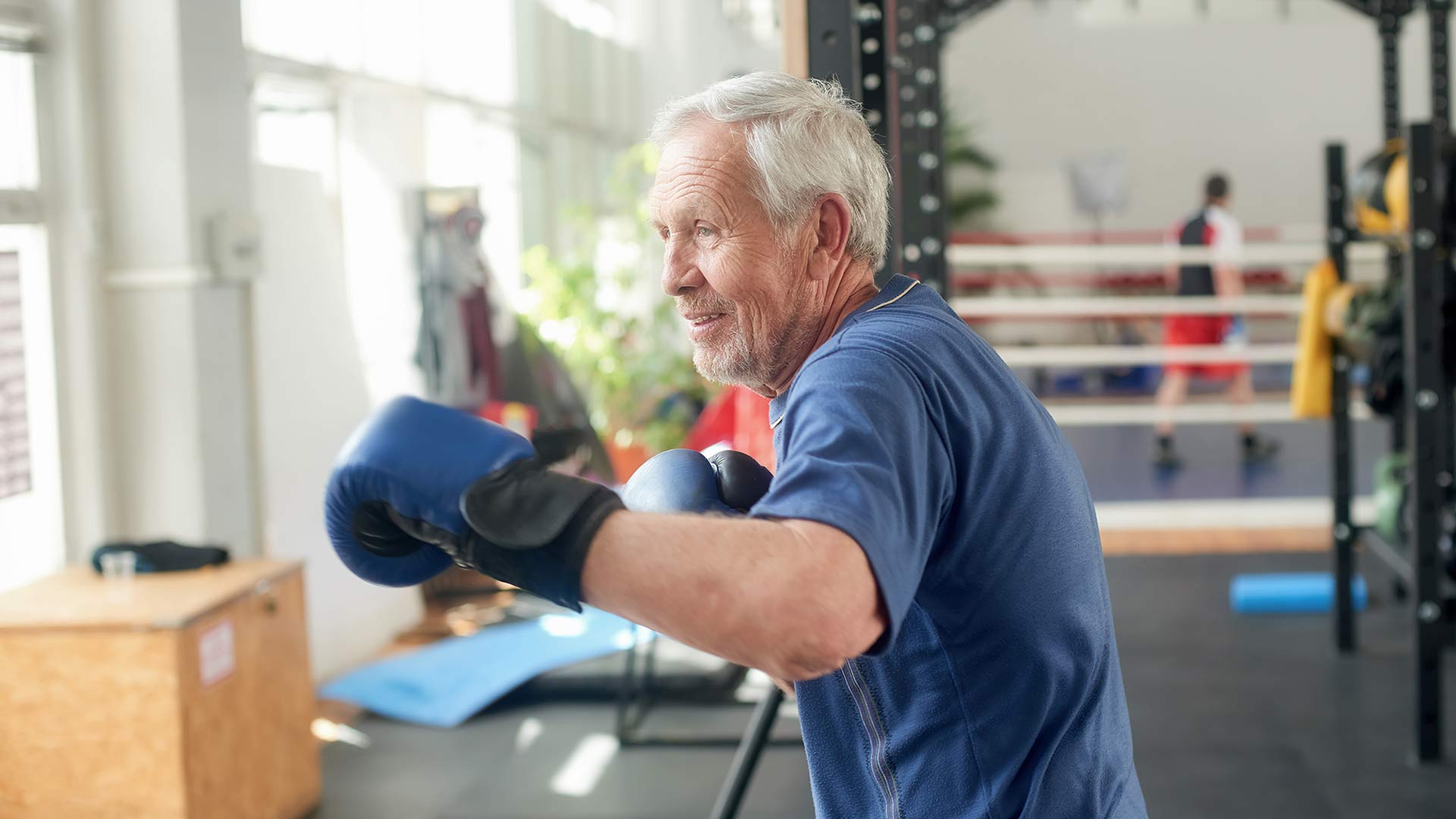
Boxing for Parkinson’s? At first, that may sound surprising. Parkinson’s disease affects nerve cells in the brain, so blows to the head would clearly not be appropriate. But Parkinson’s boxing is not competitive boxing, and it does not involve hitting another person. It is a non-contact, boxing-inspired exercise program built around movements such as punching into the air, working with a punching bag, practicing footwork, and training coordination, balance, endurance, and strength.
For many people with Parkinson’s, boxing can be more than a workout. It can help train large, intentional movements, improve fitness, support posture and balance, and build confidence. Some participants also report that their mood lifts after training and that the sense of community helps them feel less alone.
This article explains what people with Parkinson’s learn in boxing classes, how non-contact boxing may help with Parkinson’s symptoms, what safety precautions matter, and how to find a Parkinson’s boxing program.
- What do people with Parkinson’s learn from boxing?
- How does boxing help with Parkinson’s disease?
- Muscle strengthening
- Improved posture
- Endurance and Fitness Training
- Promoting the coordination of movements
- Improving mobility
- Training the vestibular system
- Strengthening the voice
- Improved concentration
- Promoting resilience and self-confidence
- A Way Out of the Frustration of Illness
- A way out of hopelessness and isolation
- The disease may progress more slowly
- Boxing – considered safe in specialized Parkinson’s classes
- How often does the boxing training for people with Parkinson’s take place?
- Boxing for People with Parkinson’s – How Do I Find a Class?
- Does health insurance cover the cost of boxing for people with Parkinson’s?
What do people with Parkinson’s learn in boxing classes?
Parkinson’s boxing classes can vary, but many programs include similar elements. A typical class may include a warm-up, aerobic exercise, strength training, balance work, footwork, reaction drills, coordination tasks, and boxing-inspired movement sequences.
The boxing part usually does not involve physical sparring. Participants may put on boxing gloves and practice punches against an imaginary opponent, into the air, or against a punching bag. This is often called shadowboxing or non-contact boxing.
Classes are usually led by instructors who have specific training in working with people with Parkinson’s or who collaborate with physical therapists, occupational therapists, or healthcare professionals. This is important because safety, balance, fatigue, fall risk, and symptom differences all need to be considered.
How can boxing help people with Parkinson’s?
People with Parkinson’s who take part in boxing programs often describe physical, mental, and emotional benefits. Research on Parkinson’s boxing is still developing, and programs are not all standardized. However, studies and reviews suggest that non-contact boxing may support areas such as strength, balance, gait, mobility, cardiorespiratory fitness, mood, and quality of life.
Boxing should be understood as a supportive exercise approach, not as a cure for Parkinson’s. It does not replace medication, physical therapy, occupational therapy, speech-language therapy, or medical care. But for some people, it can become a motivating and meaningful part of a broader Parkinson’s treatment plan.
Strengthening the muscles
Boxing-inspired training can strengthen both large muscle groups and smaller stabilizing muscles. Punching, holding the arms up, rotating the trunk, stepping, shifting weight, and moving in different directions all require coordinated muscle activity.
The upper body is especially active during boxing. The arms, shoulders, chest, upper back, and core muscles are used repeatedly. Footwork and stance changes also train the legs, hips, and trunk. Over time, this may help some people feel stronger and more capable in daily life.
Supporting posture
Many people with Parkinson’s develop a more stooped posture over time. Because boxing involves upright stance, arm extension, trunk rotation, shoulder work, and active movement through the upper body, it may help some participants become more aware of posture and practice a more upright position.
This does not mean boxing can reverse all posture changes in Parkinson’s. But as part of a well-designed exercise program, it can support strength, body awareness, and more active movement patterns.
Improving endurance and fitness
A regular boxing class can raise the heart rate and challenge endurance. This can help improve overall fitness, especially when training is adapted to the person’s ability and performed consistently.
Better endurance may make some everyday activities feel less exhausting. Walking, climbing stairs, carrying groceries, or managing a busy day may become easier when general fitness improves.
Training coordination
Boxing requires the arms, legs, eyes, trunk, and attention to work together. Participants may need to coordinate steps with punches, respond to verbal cues, remember movement sequences, and change direction quickly.
This makes boxing a cognitively engaging form of exercise. It trains not only movement, but also timing, reaction, sequencing, and attention. These are areas that can become challenging for some people with Parkinson’s.
Supporting mobility and larger movements
Parkinson’s often causes movements to become smaller and slower. Boxing encourages large, deliberate movements: reaching, rotating, stepping, punching, shifting weight, and moving in multiple directions.
Practicing these bigger movements may help some people move more freely in daily life. It may also complement physical therapy approaches that focus on amplitude, range of motion, gait, and functional movement.
Training balance and stability
Many boxing drills require weight shifting, turning, stepping forward and backward, sidestepping, and changing direction. These movements can challenge balance in a controlled environment.
Some programs also include balance exercises on different surfaces or with changing foot positions. For people with Parkinson’s, this can be helpful because balance, gait, and postural stability are often affected. However, balance work must be adapted to the person’s fall risk and should be supervised when needed.
Supporting voice and breathing
Some Parkinson’s boxing classes include loud counting, calling out combinations, or shouting during punching drills. This may encourage stronger breath support and vocal effort.
A soft voice and reduced speech volume are common in Parkinson’s, especially as the disease progresses. Boxing is not a substitute for speech-language therapy if speech, voice, or swallowing changes are present. But vocal effort during class may support awareness of breath, posture, and voice use.
Supporting concentration and cognitive engagement
During boxing, participants need to stay alert. They may follow instructions, remember combinations, coordinate steps and punches, respond to cues, and maintain balance at the same time.
This combination of physical and cognitive challenge can make boxing mentally engaging. Exercise in general is associated with benefits for brain health, and boxing may be especially motivating for some people because it combines movement, rhythm, attention, and problem-solving.
Building confidence and resilience
For many people with Parkinson’s, boxing feels empowering. Putting on gloves, learning new skills, and practicing strong, intentional movements can change how people experience their own body.
Some participants report that boxing helps them feel more confident, more active, and more willing to try things they had avoided. This psychological benefit is important. Parkinson’s can make people feel limited or dependent; a supportive boxing program can create a space where movement feels strong again.
Helping with frustration, stress, and low mood
Living with Parkinson’s can be emotionally difficult. Some people experience frustration, anxiety, sadness, or depression. Boxing can offer a structured way to release stress and tension through movement.
Punching a bag or practicing strong movements can also feel symbolic: instead of feeling passive in the face of the disease, some people feel they are actively doing something for themselves. This does not make boxing a treatment for depression, but it may support mood as part of a broader plan that can include medical care, counseling, medication, social support, and regular exercise.
Reducing isolation through community
Many Parkinson’s boxing programs are group-based. That community can be one of the most valuable parts of training. Participants meet others who understand what it means to live with Parkinson’s, exchange experiences, laugh together, and support one another.
This social connection can help reduce isolation. For some people, the class becomes not only a workout, but also a source of belonging, encouragement, and routine.
Can boxing slow the progression of Parkinson’s?
This is an important question, and it requires careful wording. Regular exercise is one of the most important supportive strategies in Parkinson’s care. Research suggests that exercise can improve many motor and non-motor symptoms, and some studies are exploring whether certain types and intensities of exercise may influence disease progression.
For boxing specifically, studies suggest potential benefits for symptoms such as balance, mobility, gait, strength, mood, and quality of life. However, claims that boxing slows Parkinson’s progression should be treated with caution. Boxing has not been proven to stop or slow the underlying neurodegenerative process.
The most accurate message is this: non-contact boxing may help people with Parkinson’s stay active, train important movement skills, improve fitness, and support quality of life. Whether it slows progression remains an area of ongoing research.
Parkinson’s boxing is non-contact boxing
Parkinson’s boxing is not the same as competitive boxing. People with Parkinson’s do not fight each other in a ring, and they should not receive blows to the head. In Parkinson’s boxing programs, punches are usually directed into the air, toward a punching bag, or toward padded mitts held by an instructor or partner. The focus is on movement, coordination, strength, balance, confidence, and fitness — not on combat.
For this reason, non-contact boxing programs designed for Parkinson’s can be a safe form of exercise when they are adapted to the person’s abilities, led by trained instructors, and performed without head contact or full-contact sparring. Safety still matters. People with significant balance problems, heart disease, severe freezing of gait, cognitive impairment, dizziness, or a high fall risk should speak with their healthcare team before starting and may need a more supervised or individualized program.
Frequently asked questions about boxing and Parkinson’s
How often should people with Parkinson’s do boxing training?
The right training frequency depends on the person’s fitness level, Parkinson’s symptoms, balance, fall risk, other medical conditions, and overall exercise routine. Some people attend a Parkinson’s boxing class once a week, while others train two or three times per week.
Many programs are built around regular weekly participation. To notice benefits, consistency is usually more important than doing a single intense session now and then. People who are new to exercise should start gradually and increase intensity only when it feels safe and manageable.
A good goal is to include boxing as part of a broader exercise plan that also supports aerobic fitness, strength, flexibility, balance, and functional mobility. A physical therapist or movement disorders care team can help determine what level and frequency are appropriate.
How can you find a Parkinson’s boxing class?
In the United States, many people start by looking for a Rock Steady Boxing program, a well-known non-contact boxing program designed specifically for people with Parkinson’s. Rock Steady Boxing offers a class finder that can help locate programs in many areas.
You can also ask:
- Your neurologist or movement disorders specialist
- A physical therapist or occupational therapist
- A local Parkinson’s Foundation or APDA chapter
- A Parkinson’s support group
- A YMCA or community fitness center
- A rehabilitation clinic
- A hospital-based wellness or neurorehabilitation program
When choosing a class, ask whether the instructors have experience with Parkinson’s, whether the program is non-contact, how they handle fall risk, whether classes are grouped by ability level, and whether modifications are available for people with balance problems, fatigue, DBS, freezing of gait, or other medical concerns.
Does insurance cover Parkinson’s boxing classes?
In the United States, most community boxing or fitness classes are paid out of pocket, but costs vary widely by program and location. Some nonprofit, YMCA, hospital-based, or community programs may offer reduced fees, scholarships, or financial assistance.
Health insurance is more likely to cover medically necessary physical therapy or occupational therapy than a general fitness class. If boxing-based exercises are part of a supervised rehabilitation plan, coverage may depend on the provider, diagnosis, plan rules, referral requirements, and medical necessity.
Before starting, ask the program about fees and ask your insurance plan whether any related physical therapy, rehabilitation, wellness, or community exercise benefits are available.
Key Takeaways: Is Boxing Good for Parkinson’s?
Non-contact boxing can be a motivating and supportive form of exercise for many people with Parkinson’s. It may help train strength, endurance, balance, coordination, larger movements, posture, confidence, and social connection.
The key is choosing the right program. Boxing for Parkinson’s should be non-contact, adapted to the person’s abilities, and led by instructors who understand Parkinson’s or work closely with healthcare professionals. It should also fit into a broader care plan that includes medical treatment, regular exercise, therapy when needed, and ongoing support.
For many people, the greatest benefit is not only physical. Boxing can offer a sense of energy, courage, community, and joy — at a time when Parkinson’s can otherwise make life feel smaller.