Carina Lummer: Why Parkinson’s Care Needs Better Networks
Better Parkinson’s care takes more than one doctor’s office. Carina Lummer, managing director of Parkinson Netzwerke Deutschland e.V., discusses how regional care networks connect doctors, therapists, nurses, social workers, and patient advocates to support people with Parkinson’s and their families.
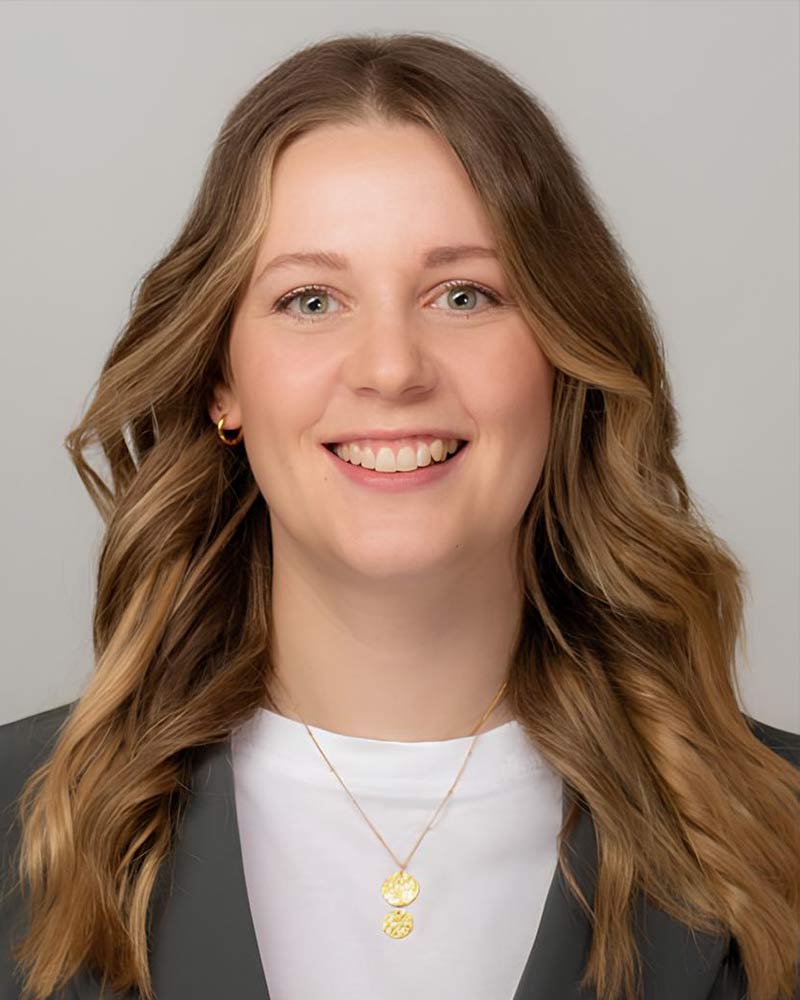
Ms. Lummer, you have a background in health economics. What led you to choose this field, and how did you first become involved with Parkinson’s disease?
My path began with a bachelor’s degree in business administration, but even then, I realized that the traditional business environment was not the right fit for me. I then began exploring healthcare in greater depth, including through an internship at a hospital, which showed me how fascinating it is to develop care concepts. During my master’s program in Bayreuth, Germany, I specialized in health economics. It was during an internship that I first came into contact with Parkinson’s and network-based care. That work stayed with me, and I later continued to pursue network-based care academically. Today, I work at Optimedis, where we are working together to improve regional care structures. What fascinated me most was the enormous potential in designing non-physician care structures — concepts that put people at the center but go beyond traditional physician-led care.
You are Managing Director of Parkinson Netzwerke Deutschland e.V. , founded in 2023. Have you been involved from the start?
Yes, I am a founding member together with Prof. Dr. Tobias Warnecke and Prof. Dr. Carsten Eggers. The association’s work originated from a working group on the topic of networks. Originally, this was very medical in nature, but over time more perspectives were added, including from management and research. Together with other committed individuals, we developed the statutes and founded the association in March 2023. The aim was to give the many regional networks a coordinating, supportive body that is also able to raise funds. Especially at the beginning, it was a lot of personal initiative: we wrote the articles of association in our free time in the evenings and then asked someone with a legal background to proofread them. Today, this has developed into a professional structure that has a nationwide reach.
What are the goals of Parkinson Netzwerke Deutschland e.V.?
We want to improve care for people with Parkinson’s by networking all those involved. Care in Germany varies greatly from region to region. In some areas, such as Saxony, there is a considerable shortage of specialists, while in other federal states, care is significantly better. Local networks can respond to these specific needs. The association supports these regional structures, offers guidelines, quality criteria and an audit procedure to ensure the quality of care. It is also important to define what constitutes a genuine network: it is not enough for two neurologists to exchange information. Interdisciplinary cooperation between all those involved, including nursing staff, therapists, social workers and patient representatives, is crucial.
How is such a Parkinson’s network structured, and what actually happens there?
The networks organize regular meetings, usually on a quarterly basis, at which all care stakeholders in a region come together. The elements of education, communication and coordination are important here. For example, there are professional impulses, but also space for exchange. If a therapist can speak directly to a neurologist because they are both in the same network, this improves care immensely. Some networks have now also employed coordinators who organize events and actively promote exchange. At one of these meetings, for example, an innovative format was introduced: Case conferences with “personas” – fictitious but realistic patient examples that take into account not only medical, but also social and emotional aspects. This opens up new perspectives, for example: What role does nutrition play? What psychological needs exist?
Are patients also part of these networks?
Yes, absolutely. Patient advocacy groups are an important part of the networks, and including their perspective is also one of our quality criteria. Our goal is for care to become seamless for patients. They should not have to fight their way through the system. Ideally, they should not even notice that they are part of a network — they should simply feel well cared for. Involving those affected is important to us, while at the same time, we are careful not to overwhelm them. Care must be designed in a way that relieves patients, not places additional demands on them. Of course, they need to be informed and involved at the relevant points, but they should not be made responsible for every coordination process or structural question.
How can healthcare providers become part of a Parkinson’s network?
Healthcare providers in Germany can contact their regional networks and attend meetings. Later, they often enter into a cooperation agreement that defines the collaboration. This agreement is not legally binding, but it expresses a shared commitment to care. What matters is active involvement, for example by participating in meetings or educational events. We do not expect everyone to take on the same role, but we do expect everyone to contribute actively. It is about creating a culture of collaboration.
How can people with Parkinson’s find out whether their physicians and therapists are part of a network?
We are currently working with the Hilde Ulrichs Foundation on an online tool called Parkinson’s Pilot. In future, it should be possible to research regional care providers and see who is part of a network. This will enable patients to actively choose network care.
What role do these networks play in actual care delivery?
A very central one. They function almost like a quality seal for coordinated, interdisciplinary care. The networks work with tools such as so-called Quickcards. These are a type of referral with concrete therapy recommendations that enable dialogue between neurologists and therapists. In addition, network managers are becoming increasingly common. They provide organizational support and systematically promote communication and exchange.
Where do you currently see the biggest challenges in caring for people with Parkinson’s?
One challenge is diagnosis. Especially at the beginning, symptoms are often nonspecific. Many people only receive a confirmed diagnosis after several years. Another challenge is that Parkinson’s is highly individual, which makes standardized care difficult. On top of that, there are emotional burdens and caregiving challenges, including for family members. What helps many patients is exchange with others, for example in support groups — and also humor, as we often hear.
Which innovative care models do you find most promising?
Regional care is the key. Supplemented by digital solutions, such as telemedicine or digital health applications (DiGAs), to bridge supply bottlenecks. Telemedicine is a great benefit for people in rural areas in particular. The idea is that GPs can consult with Parkinson’s specialists digitally when a diagnosis is pending or therapy adjustments are necessary. There are also already good apps for therapy services themselves, for example for exercise therapy. However, a political framework is also needed to anchor these innovations in the long term.
What needs to change at the policy level for these networks to be sustainable long term?
Regional network work needs structural and financial recognition. Services such as care coordination and network management must be reimbursed. We are in discussions with health insurance providers, we work with care data, and we hope that this will eventually lead to official reimbursement models. Political advocacy, such as conferences and discussions with decision-makers, is also part of this. We also look to models such as the shared-savings principle for guidance.
Was there a moment that made especially clear to you how important network-based care is?
Communication often reveals that even small adjustments in everyday life can improve patient care.
In communication, it often becomes clear that even small adjustments in everyday life can improve patient care. Simple coordination can make a huge difference. It shows that care must not be understood only in medical terms, but also in social and organizational terms. Often, the problem is not a lack of expertise, but a lack of structure and communication.
Ms. Lummer, thank you very much for speaking with us and for your great commitment.

More exciting interviews
Silvia Lerch is forging her own path with Parkinson’s — connecting young people, bringing movement into peer support, and encouraging others to stay active.
Josefa Domingos approaches therapy through daily life — creatively, close to the patient, and with the courage to keep rethinking Parkinson’s care.
The gut may play a more important role in Parkinson’s than previously thought. Dr. Arnout Bruggeman discusses microbiome research and new therapeutic perspectives.
Deep brain stimulation can significantly ease Parkinson’s symptoms. Dr. Patricia Krause explains who may benefit from this advanced therapy.
Therapy dog Ludwig makes movement more enjoyable: Prof. Dr. Carsten Eggers discusses innovative dog-assisted therapy, motivation, and self-efficacy in Parkinson’s care.
When the voice becomes softer, early support is essential. Dr. Tabea Thies discusses speech therapy, communication, and everyday safety.
Speech-language pathologist John M. Dean discusses digital therapy, movement, and motivation — and how to better reach people with Parkinson’s in daily life.