Silvia Lerch: Building Support for Young-Onset Parkinson’s
After being diagnosed with Parkinson’s at 41, Silvia Lerch began connecting with other young-onset patients in Switzerland and building support initiatives of her own. She shares how peer support, Move4YPD, Ping-Pong-Parkinson, freezing, DBS, and staying active shape her life with Parkinson’s.
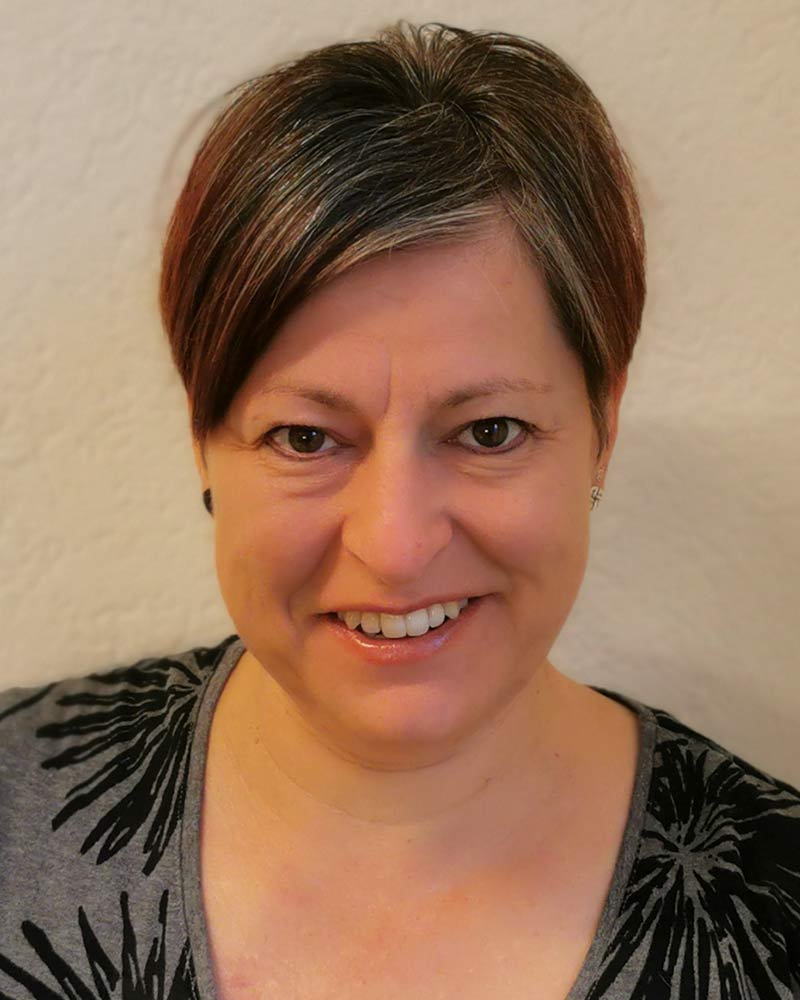
Could you tell us about your Parkinson’s journey? When and how was the disease diagnosed, and how did you take the diagnosis at the time?
Looking back, I would say that the first signs of Parkinson’s were already there during puberty, but of course, back then, I did not connect them with Parkinson’s at all. In my late 30s, I developed the first real Parkinson’s symptoms, and after two years in which the disease went unrecognized, I was diagnosed at 41. In people with young-onset Parkinson’s, as in my case, diagnosis is often difficult because Parkinson’s is simply not what people think of at that age. But I had suspected it for quite some time.
What Parkinson’s symptoms did you notice first?
I play trumpet in a brass band, and it became increasingly difficult for me to press the valves with my right hand. My conductor wanted me to practice more, but unfortunately, that did not help either. When I also told my doctor about other symptoms, such as loss of smell, and a smell test confirmed that I could hardly smell anything through my nose, she became alert and asked whether there was Parkinson’s in my family. Since my grandmother and my mother were also affected, she ordered a DNA test, and the result clearly showed a genetic form of Parkinson’s disease.
Looking back now, symptoms such as blood pressure problems, acne, and oily skin in my youth were probably early signs of the disease as well. But of course, when you are in your early 20s, you do not associate those things with Parkinson’s.
What did therapy look like for you in this early stage of the disease? Were there medications that did not work well for you?
For the first three years, my medication was adjusted quite well, and people could not really tell anything was wrong, except that my right arm was somewhat stiff and did not swing when I walked — the typical signs. At the beginning, I was, of course, given levodopa in the form of Madopar, as well as a dopamine agonist, Sifrol, which I did not tolerate well.
After switching to Xadago, a MAO-B inhibitor that I tolerated better, and to a different levodopa medication, I did quite well for the first five years after diagnosis. People often say that the first ten years in younger patients are the “honeymoon phase.” For me, it lasted only five years. And just one year later, I had more or less exhausted the medication options. I was taking 15 pills every day.
That is, of course, an enormous burden. How did you cope with it, and was there an alternative?
With that amount of medication, you no longer have any freedom. If you forget to take it, your symptoms immediately get worse. At that time, I went to the University Hospital in Zurich, Switzerland, and I was advised to undergo deep brain stimulation, or DBS, in order to reduce the amount of medication I needed. That worked for the first six months, and I did well on one-third of the medication. After that, I contracted COVID twice and struggled with the aftereffects of the infection, which made medication adjustments much more difficult.
How often do the DBS settings need to be adjusted, and how are you managing with it?
My first experience during rehabilitation was quite frustrating. The doctors at the rehab clinic had no idea how to use the iPad to adjust the settings. That is why I stopped the rehab program, and at first, I experimented a little myself within the range of the electrical current. But of course, I cannot program the settings myself.
So far, I have been admitted to the hospital once a year to have the settings readjusted. The last adjustment worked so well for me, though, that I may not need to go in for another adjustment next year. With the new settings, I can once again go on long walks with my dog and take hikes lasting several hours — none of that was possible before.
Do you use support systems or support groups, and how did you find these valuable resources?
At first, I attended the usual support groups, but because I was so young, I was the only one there without a walker. For most of the others, the disease was already very advanced, and honestly, that shocked me quite a bit. I wanted a support group I could identify with.
I began attending information events organized by Parkinson Schweiz and deliberately tried to find other younger people with the disease. But that was not easy, because these events always took place on weekday afternoons — when younger people are still working. Still, I did not let that discourage me. I did a lot of public outreach, published newspaper articles in the Solothurner Blatt and regional newspapers, and it worked.
Today, we have almost 80 members. Some have been with us from the beginning, and the youngest person affected is 23 years old. Of course, not everyone is equally active — everyone deals with the diagnosis and the disease differently — but between 10 and 20 people usually take part in our events.
How often do you meet? What unusual things have you done together so far?
We meet every six weeks, and each year has a special theme. One of them was “Going Beyond Limits.” We went tandem paragliding, which was a real highlight. Some people had to overcome quite a bit of fear, but in the end, everyone loved it.
Public outreach and Parkinson’s visibility seem to be very important to you. Are there other things you do to support people with Parkinson’s?
I launched the website Move4YPD — Move for Young-Onset Parkinson’s Disease — to specifically support younger people affected by Parkinson’s. There, people can find many projects, activities, information, workshops, and useful resources around support, networking, and living with Parkinson’s.
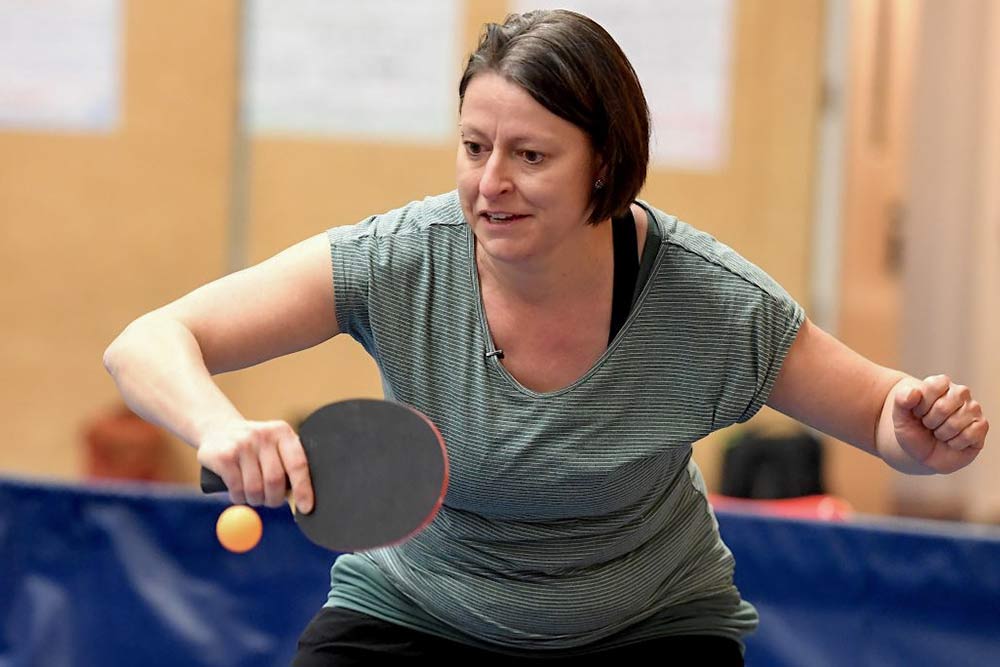
I also brought Ping Pong Parkinson to Switzerland. We heard about the World Championship in Berlin, Germany, and I jokingly asked my group whether anyone wanted to come along. We started training and, in the end, nine of us traveled to Berlin. At the German Open three years ago, my friend Daniela and I won gold. Our ping-pong group, with about 50 new players, still exists today, and we founded the association pingpongparkinsonschweiz.ch.
What would you like to see from policymakers when it comes to Parkinson’s disease?
I am very politically active myself because, to this day, Parkinson’s is not officially recognized as an occupational disease in Switzerland, which means there are no statistics on it. I would like Parkinson’s no longer to be seen only as a disease of old age, and I would like younger people with Parkinson’s to receive better support. Having to fight unnecessarily for disability benefits adds another burden for people with Parkinson’s, and that has to change.
Do you have problems in everyday life? How do you deal with them? Are there problems with the people around you? Do you have any specific tips or strategies that help you cope better?
At the moment, my main gait-related problem is freezing. As long as I have a clear path, nothing happens. But in crowds, at the train station, or on stairs, it can sometimes become difficult. Then I have to do a lot of mental work and consciously tell myself: Big step! Big step! And then it usually works.
Patience can also be a problem sometimes, especially from other people. Recently, I had a freezing episode while boarding a train and simply could not get on. Then someone behind me asked whether I could not move a bit faster. I simply told him, “My Parkinson’s does not want it to go any faster.” Still, I try not to avoid these situations. For me, it is training. Every week, I walk through a busy train station full of people so that I do not develop an overwhelming fear of those situations in the first place.
How would you like people around you to react in situations like that?
The most important thing is not to put pressure on me. That is the worst thing. When someone applies pressure, stress kicks in, and with it adrenaline. That creates a very strange reaction in the brain, and then nothing works anymore.
Which supportive Parkinson’s therapies have you tried? What has helped you most in managing everyday life?
For the past six months, I have had a physical therapist who specializes in Parkinson’s. I go to therapy once a week, and it really helps a lot. But you also have to train a lot at home yourself — my physical therapist immediately notices whether I have been doing my exercises regularly or not. The LSVT BIG exercises are also worth their weight in gold. I try to do all seven exercises every morning, although I do not always manage it.
I do not have speech therapy because I play in a brass band — regular practice is wonderful therapy. Active membership in the club, making music together, and performing in concerts are also wonderful. There, too, I communicated from the very beginning that I have Parkinson’s, and everyone understands if, for health reasons, I sometimes cannot come to rehearsal.
Because your disease began early, you were still in the middle of your working life when you received the diagnosis. What impact did that have? Did you have to change anything, and were you able to continue working?
At the time of diagnosis, I was working as a test manager for IT software at a health insurance company. For the first three years after my diagnosis, I continued working full-time. But then the more severe symptoms began, and I also struggled a lot with fatigue. Fortunately, I was able to reduce my hours to 50% and work from home. That worked really well. For me, it was my dream job: organizing people, organizing the project, exchanging ideas with many different departments. I am a project manager through and through. I continued working in my profession until the end of 2022. Now I put my energy and my organizational talent into the support groups. Officially, I am retired, but the way I see it, I am still working — just on a volunteer basis.
Have you come into contact with Parkinson’s apps through your work, and can you imagine them being a useful addition to therapy?
I have actually tested a Parkinson’s app before, but it was not very well received. The main problem was that the alarm function did not work and entering the medication was very cumbersome. But if those things worked well, and if the app perhaps also provided reminders and suggestions for daily exercises, it could definitely be a good thing.
Is there a particular memory or event that made you especially proud because you achieved it despite Parkinson’s?
Absolutely. I wanted to preserve my normal life for as long as possible — although normality changes over time, too. Since childhood, I have been a fan of wolves and huskies. I devoured countless books about sled dogs and journeys through Siberia or Alaska. When, in 2019 — five years after my diagnosis, just as things were starting to get worse — I had the opportunity to take part in a sled dog trip to Lapland, I immediately knew I absolutely wanted to go. Swiss Radio and Television made a documentary about it: Adventure Lapland — The Husky Tour of a Lifetime.
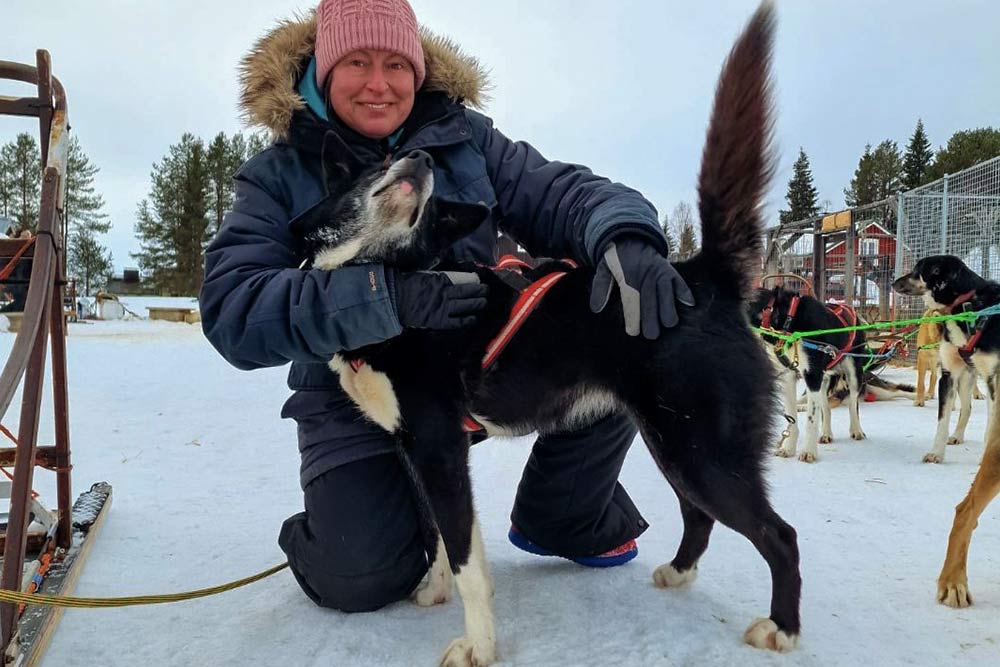
There were five of us, and in December, in icy temperatures, we traveled 200 kilometers through Lapland by dog sled. We were on the road for five days and slept in tents at temperatures below minus 20 degrees Celsius, or minus 4 degrees Fahrenheit. We did not know each other and had no experience with the dogs. But it was an incredible experience — and the friendships have lasted to this day. I am very proud of that experience and of the fact that I managed it despite Parkinson’s.
Finally, is there anything you would like to share with our readers?
I want to encourage people. It is important to stay active, stay engaged in life, and give Parkinson’s a face. I would also like to see more public education and greater understanding in society of what Parkinson’s means in everyday life.
Thank you very much for this wonderful interview, and we wish you every success with all your future projects.

More exciting interviews
Deep brain stimulation can significantly ease Parkinson’s symptoms. Dr. Patricia Krause explains who may benefit from this advanced therapy.
Good Parkinson’s care does not happen in the doctor’s office alone. Carina Lummer focuses on regional networks that support patients and families beyond clinical care.
When the voice becomes softer, early support is essential. Dr. Tabea Thies discusses speech therapy, communication, and everyday safety.
Speech-language pathologist John M. Dean discusses digital therapy, movement, and motivation — and how to better reach people with Parkinson’s in daily life.
The gut may play a more important role in Parkinson’s than previously thought. Dr. Arnout Bruggeman discusses microbiome research and new therapeutic perspectives.
Josefa Domingos approaches therapy through daily life — creatively, close to the patient, and with the courage to keep rethinking Parkinson’s care.
Therapy dog Ludwig makes movement more enjoyable: Prof. Dr. Carsten Eggers discusses innovative dog-assisted therapy, motivation, and self-efficacy in Parkinson’s care.